Tag Archives: story

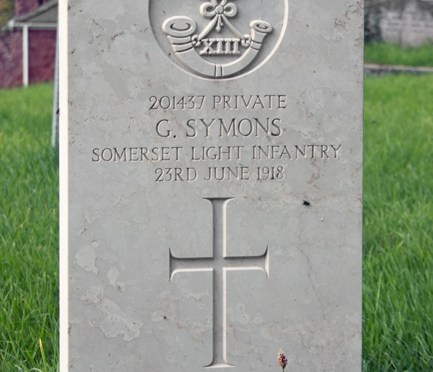
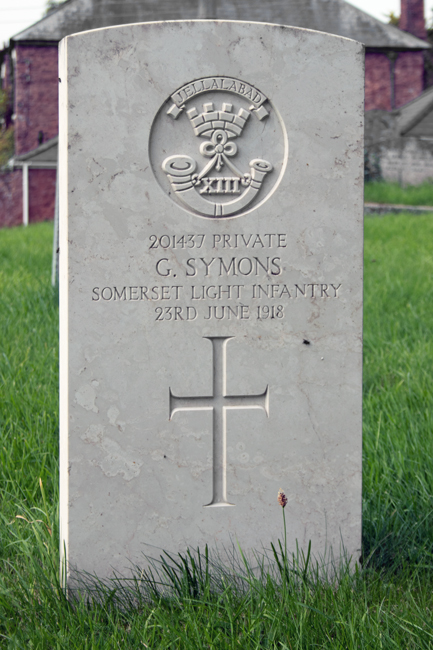
CWG: Private George Symons

Private George Symons

George Symons was born in 1895 to Charles and Rosa Symons. He was the third of five sons.

Charles worked as a carter on a farm, and his son became a cowman as soon as he could leave school.

Military records for George Symons are pretty sparse. From his gravestone we know he joined the Somerset Light Infantry; the army’s register of soldier’s effects confirm that he died in a military hospital on home soil; £23 7s 11d went to his father.

It can be assumed, therefore, that Private Symons served on the Western Front (where the Somerset LI was), was injured and brought home for treatment or rehabilitation.

Private George Symons lies at rest in the churchyard of St Michael and All Angels in Milverton.


CWG: Private William Rawle

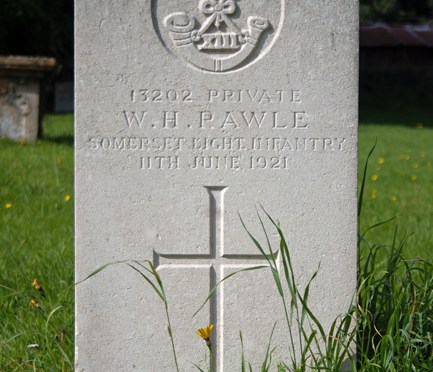
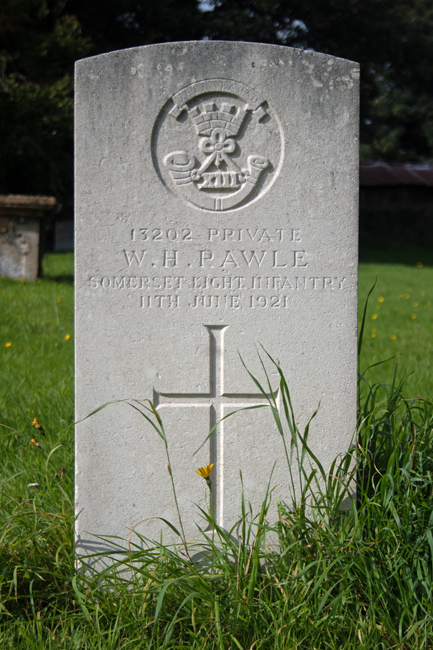
Private William Henry Rawle

William Henry Rawle was born in 1894, the eldest child of George Rawle, a sailor, and Louisa, his wife.

At the time of the 1911 census, William was working as a carter on a farm not far from Porlock in Somerset.

He enlisted in August 1914, joining the Somerset Light Infantry and serving as part of the Expeditionary Force. After a couple of postings, Private Rawle was transferred to the Pioneer Depot in March 1916.

Six months later William was medically discharged as unfit for continued service. His notes highlight his distinguishing marks as 3 marks on his left arm, birth mark under his right nipple and gunshot wound to the left eye (which I am guessing is what led to his discharge).

William died on 11th June 1921, aged 27 years old. I have been unable to find anything specific relating to his death and it is likely, therefore, that no misadventure was involved.

Private William Henry Rawle lies at peace in the churchyard of Lydeard St Lawrence, alongside his brothers Stephen and Ernest.


It should be noted that, by June 1921, Louisa Rawle had lost three of their four sons to the Great War. Her husband, George, had also passed away in 1915.

Louisa’s other son – Edward – also served, enlisting in the Somerset Light Infantry and fighting in the Balkans. Private Edward Rawle survived the war, returning home in March 1919.


CWG: Private Ernest Rawle

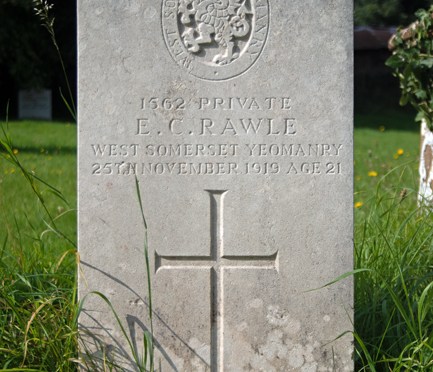
Private Ernest Charles Rawle

Ernest Charles Rawle was born in 1894, the fourth son of George Rawle, a sailor, and Louisa, his wife.

It has not been easy to find information on his war service. What I have been able to ascertain is that Ernest was still at school at the time of the 1911 census, and enlisted in the West Somerset Yeomanry.

He was discharged with a disability on 23rd May 1919, passing just six month later. He was just 21 years old.

Private Ernest Rawle lies at peace in the churchyard of Lydeard St Lawrence, alongside his two brothers, Stephen and William.


CWG: Private Stephen Rawle

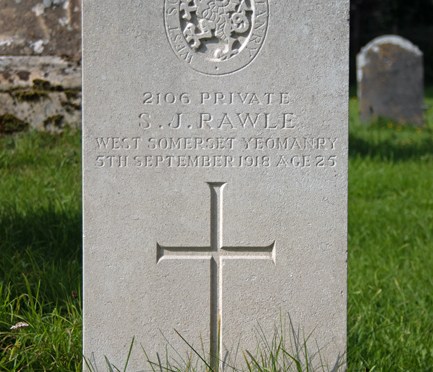
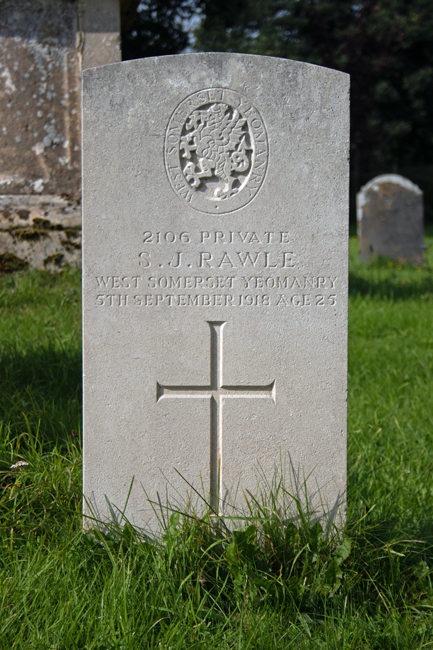
Private Stephen John Rawle

Stephen John Rawle was born in 1894, the second of four sons of George Rawle, a sailor, and Louisa, his wife.

By the time war broke out, Stephen was working as a groom in Wheddon Cross, just south of Minehead.

As the Great War loomed, he enlisted and Private Rawle serving on the home front. His record show that he stood at 5ft 9.5ins (1.76m) and was of good enough health to be enrolled for the Territorial Force. He was assigned to the West Somerset Yeomanry.

He was medically discharged from service on 29th March 1915, having served for one year and 31 days. The records show no signs of injury or wounds, and newspapers of the period do not link him with any misadventure. I can only assume, therefore, that he died of natural causes, possibly linked to the Spanish Flu Pandemic.

Private Stephen John Rawle lies at rest in the churchyard of Lydeard St Lawrence, alongside two of his brothers, Ernest and William.


CWG: Private James Burnett

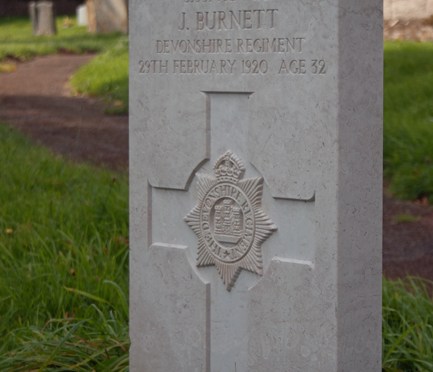
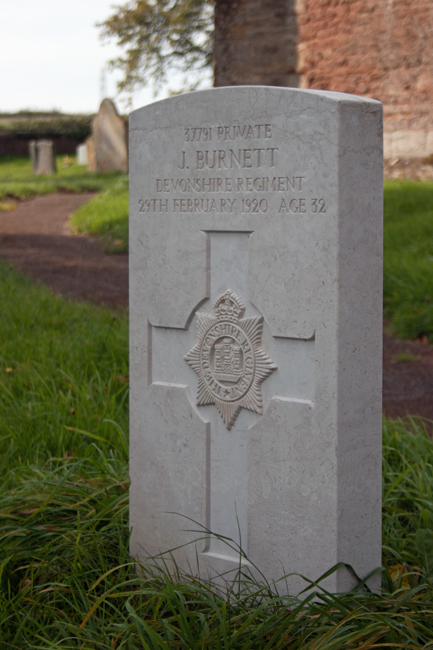
Private James Burnett

James Burnett was born in 1888, the second son of James and Sarah Ann Burnett. James Sr was a farm labourer, and his son quickly followed his line of work.

James enlisted in February 1916. He was noted as being 5ft 2ins (1.58m) tall, and weighed in at 7.5st (47.6kg).

His medical record notes that his sight was such that he should wear glasses constantly, and, in fact, he was signed off medically as Category B1 (“Free from serious organic diseases, able to stand service on Lines of Communication in France, or in garrisons in the tropics. Able to march 5 miles, see to shoot with glasses, and hear well.”)

After training, Private Burnett was mobilised in September 1916, but transferred to the Agricultural Company (of the Labour Corps) in the summer of 1917.

Sadly, however, I have been unable to locate any details of James’ passing. He died on 29th February 1920 and lies at rest in the churchyard of St Lawrence in his home village.


CWG: Sergeant Richard Prout

Sergeant Richard Edwin Prout

Richard Edwin Prout was born in 1896, the second son of Frederick and Anna (Hannah) Prout. When his father died in 1908, his mother remarried and by the 1911 census, Richard and his family had moved to Lydeard St Lawrence, where he was a baker’s boy.

He enlisted in June 1914, joining the Somerset Light Infantry and served throughout the war, receiving the Mons Star, Victory Medal and General Service Medals.

After the war, he continued in the army, and was assigned to Taunton Barracks.

His passing was unusual enough for it to be reported on in the local newspaper.

Sergt. Prout, it was stated at the Barracks yesterday, had been on leave for some days prior to his departure for Ireland, and had been spending his furlough at Crowcombe, where his parents live. On the evening of his death he left home, after taking a hearty meal, to catch the 7.25 train to Taunton. He had to walk a mile to Crowcombe station, most of the way uphill. Early the following morning his dead body was discovered lying face downwards by the roadside, about 50 yards from the station. The body was removed to his home, and Dr. Frossard, of Bishop’s Lydeard, was called in to make a post-mortem examination. The doctor has reported that death was due to asphyxia brought on by over exertion on a full stomach, and syncope, following pressure on the neck by the tightness of the collar of his outside jacket, the doctor adding that he had great difficulty in unfastening the collar.

Western Daily Press – Friday 20th February 1920

A genuine case of someone going before their time. Having visited Lydeard St Lawrence, I recognise the hill he would have had to have climbed to reach the station, and it’s steep enough in a car, let alone walking up it.

Sergeant Richard Edwin Prout, the newspaper reported, was generally esteemed by his fellow company, and at his funeral he received full military honours.

Richard Prout lies peacefully in the churchyard of Lydeard St Lawrence.


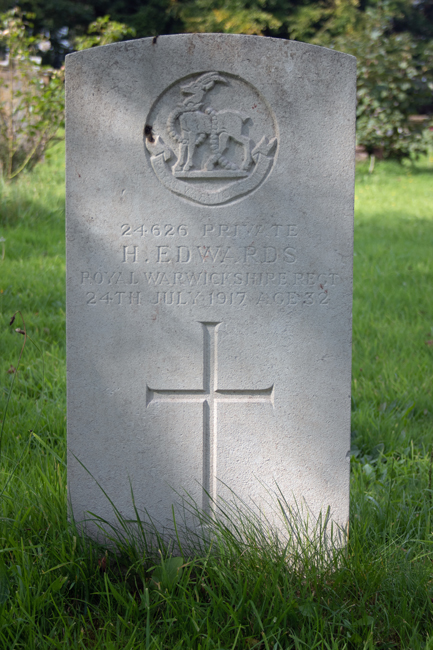
CWG: Private Harry Edwards

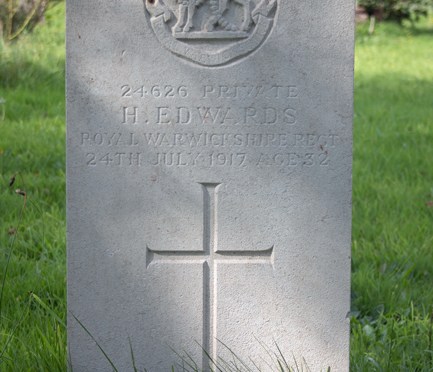
Henry Charles Edwards was born in 1883, the eldest of four children for Joseph and Elizabeth.

Joseph was an agricultural labourer, and Henry (or Harry) followed his father in the farming life, continuing in the role after Joseph died, and up until at least the 1911 census.

I was unable to find much regarding Harry’s military service. He signed up the Royal Warwickshire Regiment, and subsequently transferred to the Somerset Light Infantry.

He died from tetanus, although whether he became infected while serving or at home, I am unsure.

Private Henry Edwards lies at rest in the churchyard of Lydeard St Lawrence.


Another Brick In The Wall

There didn’t appear to be any way through, which worried Ellie.

She had been though this way countless times in her head, and each time it had been clear; an overgrown pathway, cutting through the houses between the allotment and the garage block.

But now she was faced with this wall. It was new, there was no question about it; five metres high, she could see no way over it. Pausing, catching her breath, it ran only a little way to either side, but the brambles and undergrowth barred the way.

She crouched, closed her eyes and drew a mental picture of her way out of this… mess.


A Walk of redemption

His dreams had been random, mixed, drifting dangerously close to nightmares, but intense enough to seem safe.

He dragged himself out of his slumber, sitting up slowly and self-consciously, reaching for his glasses and the cigarettes on his nightstand – putting the first on and lighting the second as he swung his feet off the bed and onto the floor.

As usual, the dream had had a rhythm to it. A pulsing feeling, deep inside of him that he still couldn’t shake.

His phone buzzed. One message, three words:

“WHERE ARE YOU?”

Marching through town, his body still waking up, his brain demanded the extra kick caffeine gave that nicotine always failed to. But there was no time for that; even as he passed the cafe he’d always visited in the past, he knew that, with its door barred, he would have to wait.

It was still odd to see all of the shops closed, all of the doors locked and shuttered, closed against an enemy they couldn’t see, couldn’t fight. Years back the very same windows had been smashed, the shops set on fire, but that enemy had been real, physical, visible.

Now the deserted streets stood as testament to something nobody could fight, so the people shrunk back within themselves, within their homes, vulnerable and scared.

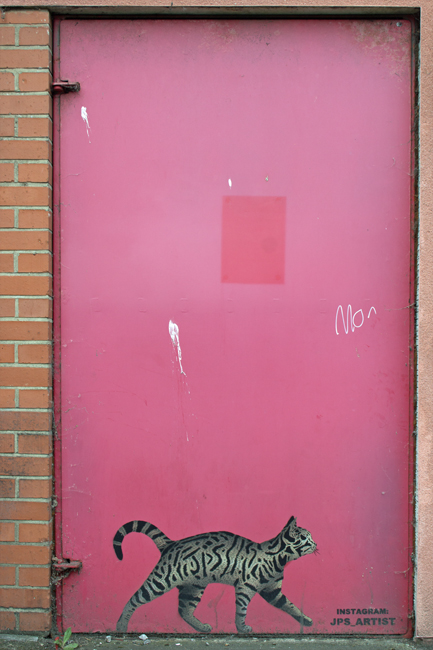
Life still had a part to play, of course, and quite literally “while the cat’s away, the mouse will play”. With no people on the streets, wildlife started to take a hold.

“Shit,” he cried out, jumping as a cat jumped out in front of him.

It was amazing to see birds, squirrels, foxes, badgers, deer on the streets, just not when he wasn’t expecting them to appear so suddenly.

The cat, seemingly pleased the success of its game, mewed and turned back down the alley, searching for some other foe to jump out on or play with.

His phone buzzed again.

“YOU’RE GOING TO BE LATE!!”

He begrudged the capital letters, but appreciated the sentiment. He had promised her this one thing, to be on time for this one single appointment, and he now ran the real risk of missing it.

She had begged his help with this. He’d failed his sister so many times before that he felt guilty at letting her down once again.

It was just an appointment, just an hour out of his day, but it meant going to the one place he wanted to avoid. The one place he dreaded. It was stupid, he knew, but he would often walk three or four streets out of his way to ensure he didn’t pass that place.

He didn’t know why he hated – or feared – it. Logically he had no reason to; the people there had only ever wanted to help him, but he saw that as a failure, even though it meant the bravest thing he would ever do.

And now, after all this time, he was heading there, straight into the lion’s den.

The first time was when he was barely more than a child. All ripped jeans and a mop of blonde hair, it had been the place he had sought sanctuary when their parents had died.

Within those four walls, he was no longer an orphan, he wasn’t pitied, coo-ed over, he was just, well, a normal teenager. His mates were there, and they talked and laughed and joked as they always had done. They listened to music, played games in the same way as everyone else, and that allowed his grief to be forgotten, if only for a few hours.

But then, on that June evening, it had changed. Changed irreparably. Forever and ever, amen.

It hadn’t been his fault, not really. Not that he could remember, anyway.

And that had been the problem. He couldn’t remember. Couldn’t recall how he had suddenly found himself with blood down his favourite tee-shirt, cradling his friend’s limp body in his arms.

When they found the two of them, crouched together in the alley behind that building, he genuinely couldn’t recollect how they had got there, what had happened to his best friend, best mate, best buddy. Couldn’t remember his own name.

Psychological trauma resulting in post-traumatic stress disorder was how they had described it. An event so devastating that his brain had shut down and hidden the incident from him.

His brain had placed that evening in a wooden box, locked it, and buried it deep within itself so that he could carry on as normal, move past it, heal physically and, eventually, get on with his life.

Mundane, ordinary things became his thing; school was all but out, so he didn’t return; chores became his routine instead, and he had gained so strong a focus for him that he shut everything else out.

He never went back there, of course, and his mates, who had been their mates, stayed away following their parents’ warnings, or simply dropped away after his constant refusal to interact with them.

He became a loner and avoided socialising wherever and whenever possible. He had no recollection of that night, but he knew deep down that he was safer on his own, and had a sense that other people were safer without him.

But, with the unswerving help and support of his sister, he moved on, slowly but surely, step by step.

Then the news he’d not anticipated. News of that place. That refuge that had become his dread. The demolition was close, and he was late for it.

The Loneliness of the Insecure and Paranoid

He was waiting for her. She was sure of that.

She’d seen him a couple of times around town, over a period of a few weeks, and sensed that he was closing in, seeking her out.

Hunting her down.

She feigned ignorance, of course. She didn’t want to let on that she knew he was following her. Didn’t want to give the game away.

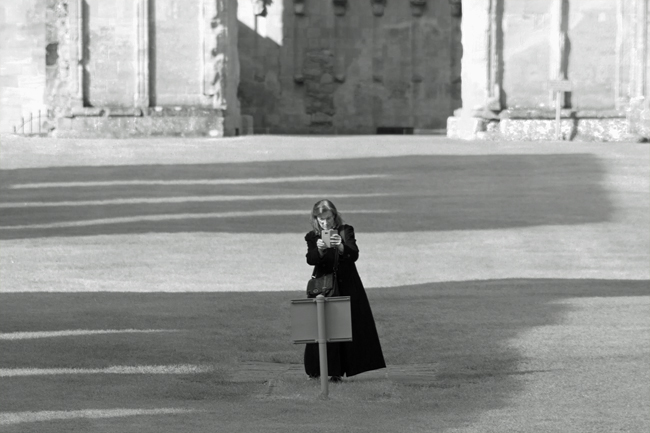
So, she carried on as normal. Walking around like a tourist, she wandered into the Abbey Park.

She knew the place like the back of her hand, having all but grown up there. But still she feigned ignorance. If he thought she was just a tourist, taking photos like the hoards of visitors did during the summer, perhaps he wouldn’t give her a second glance.

Perhaps.

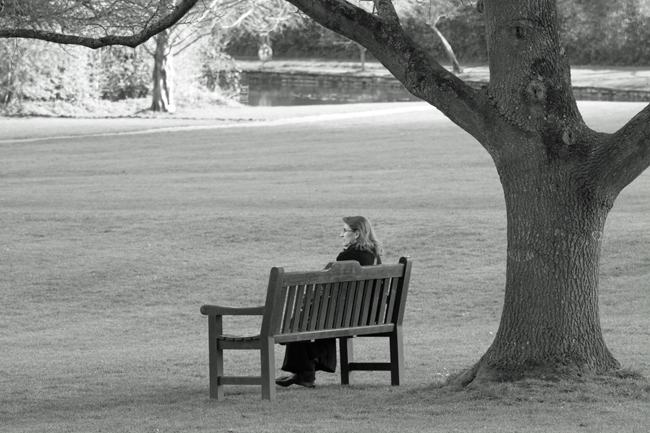
He’d tried to hide, of course, to bury himself in reading. But she knew the stance, the look, the outfit; he gave himself away a lot easier than she knew he would have liked to.

So, she had just walked on by, past the bench he was discreetly sitting on, under the magnolia tree where they had first met, all those years ago.

As if he thought she wouldn’t remember! The audacity of the man. The sheer gall of him!

And yet, the mere fact that he was there, that he was following her, gave her some reassurance.

He still wanted her.

He still needed her.

So, she resolved to go to him. Surrender to him. Accept his love, in whatever form he chose to give it.

But first, she needed to gather herself. To work out what she was going to say. She needed the words, the right words that show she was open to him.

Acceptance, but not desperation. She didn’t want him to think she was desperate.

Not again.


(This is a story based on candid street photos I took over a couple of days, and should not be seen as a true reflection of either of these people’s lives.)