Category Archives: People

CWG: Gunner Samuel Watts

Gunner Samuel Watts

Samuel Reginald Watts was born in 1897, the seventh of eight children of Samuel and Augusta Watts.

He followed his father and brothers into the main industry in the area – coal mining – and was certainly working down the pits by the time of the 1911 census.

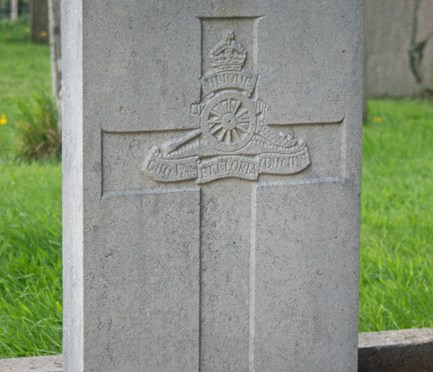
Samuel enlisted on 21st April 1918, and joined the Royal Garrison Artillery, which focused on heavy, large-calibre guns and howitzers that were positioned some way behind the front line. He was 5’5″ (1.65m) tall and weighed 144lbs (65kg). According to his war records, he had brown hair, hazel eyes and a fresh complexion.

His service started the very next day, when he was transferred to the Citadel in Plymouth for training.

After feeling unwell, complaining of headaches and a sensitivity to light, Gunner Watts was admitted to the Netley Hospital in Southampton on 18th June 1918. He was diagnosed with cerebrospinal fever, more commonly known as meningitis, and was treated over the next week.

Sadly the treatment did not work, and Gunner Samuel Watts passed away on the evening of 26th June 1918. He had been in the army for a little over two months and had not seen active service.

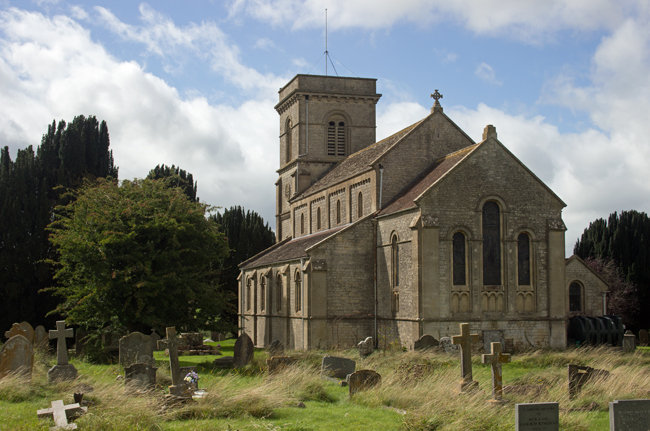
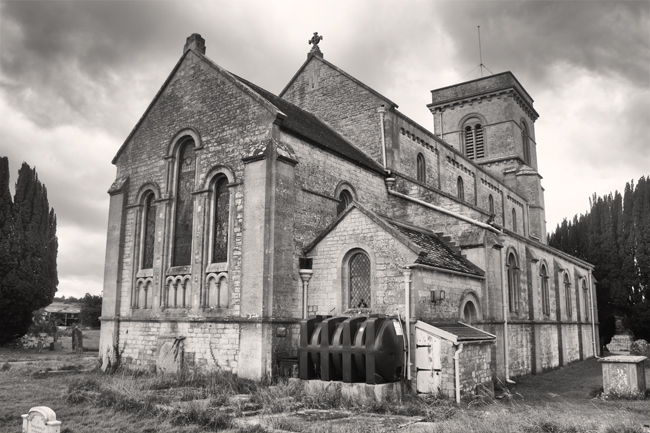
Samuel Watts lies at peace in the graveyard of St John’s Church, Farrington Gurney.
An A-Z of Somerset: Farrington Gurney

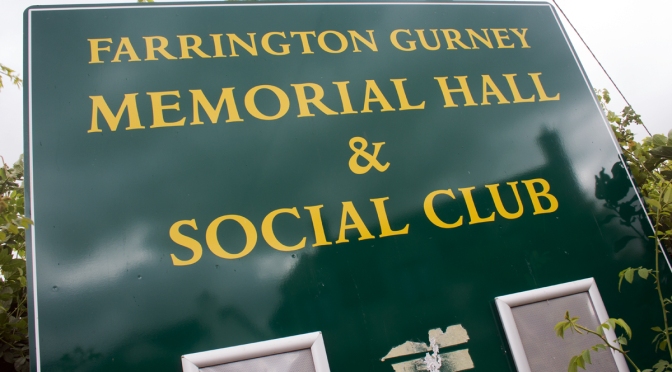
F is for Farrington Gurney

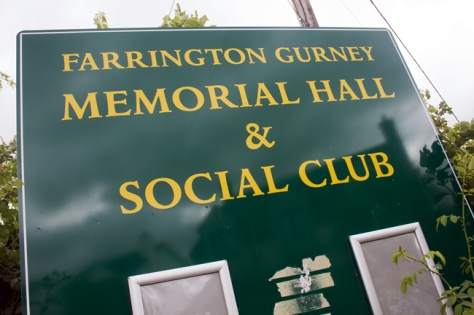
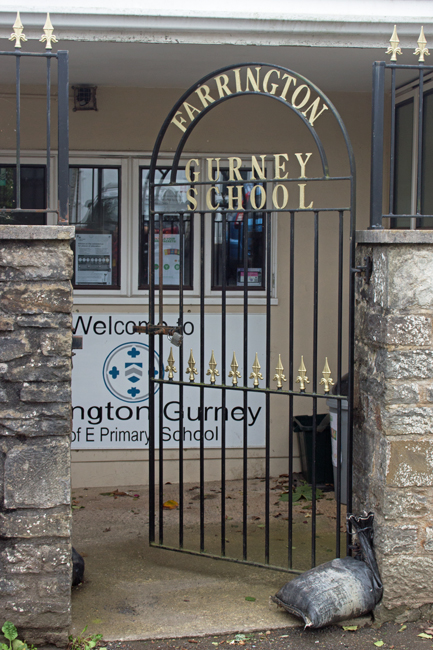
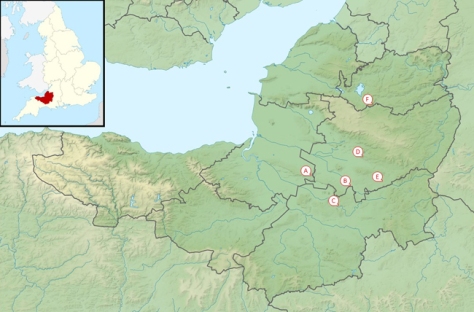
Wedged between the Somerset link roads of the A37/A39 and A362 lies the unassuming village of Farrington Gurney.
As you might guess from my previous posts, it was the village name that drew me in. The Doomsday Book mentions the village of Ferentone, while Gurney is thought to come from the de Gournay family, who owned the lands in the 12th and 13th centuries.

The village owed a lot to the coal industry. There were three pits in Farrington itself, with a further two in neighbouring Midsomer Norton.

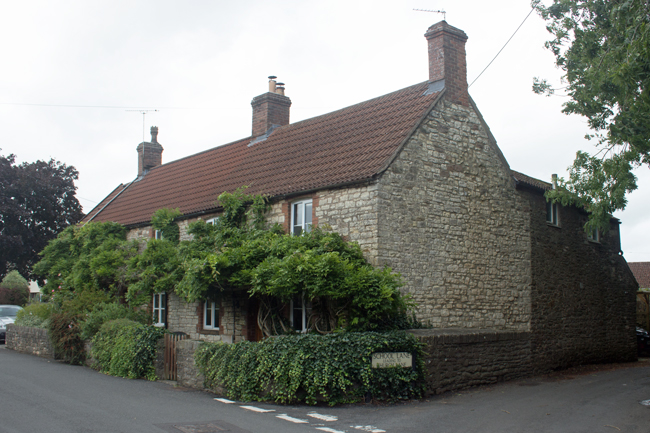
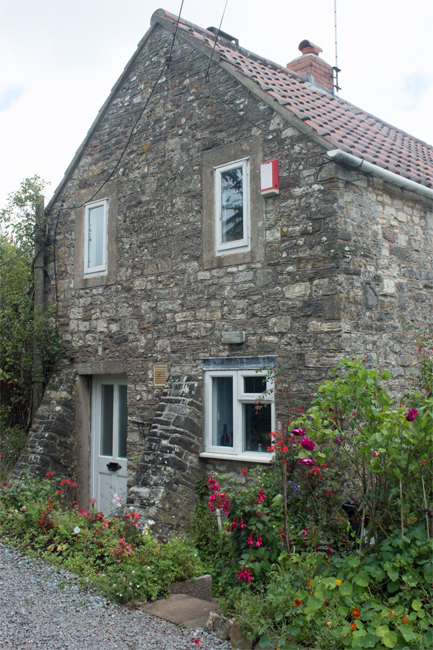
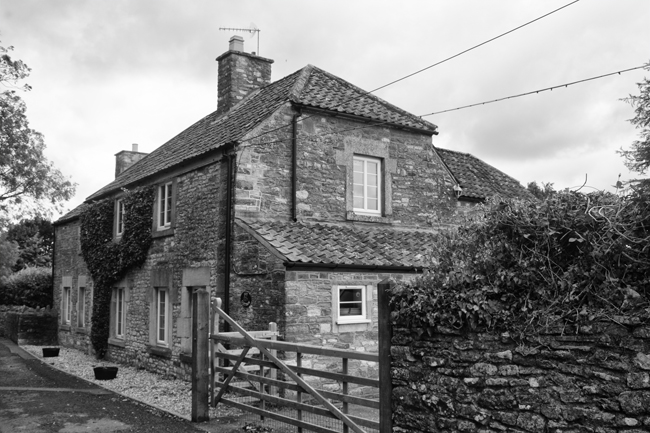
The majority of the houses are old, dressed stone, although as time has passed, newer properties have filled in the gaps between them; on the outskirts – just off the A37 – new buildings have started to sprout up.

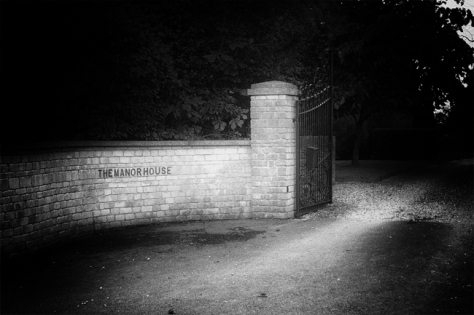
As you might expect, a manor house is at the heart of the village – hidden behind high stone walls, is a large property dating back to 1637, which you can only see from tantalising glimpses in the tree line.

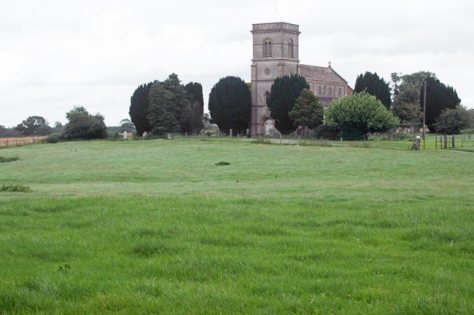
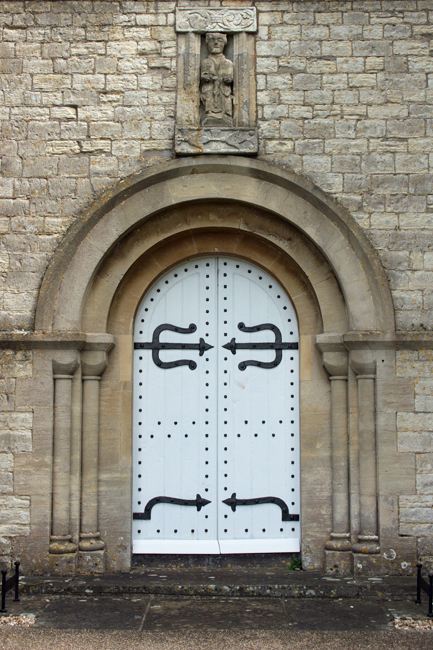
The village church – dedicated to St Jon the Baptist – is set in open fields around a mile from the village itself. It’s a small parish – there are less than 1000 residents – and the church is easily visible from form the village (and, more importantly, the manor house, the owners of which presumably paid its construction).

It’s a beautiful little church, though, and its peaceful location adds to the calm surroundings.

One war grave sits quietly in the churchyard, that of Gunner Watts – my next post will talk more about his life.

Farrington Gurney is a lovely little village; there’s a bit of a juxtaposition between the old and the new, and the proximity to two main roads can jar a little, but it fits in to the A-Z nicely.


CWG: Private Arthur Ashford

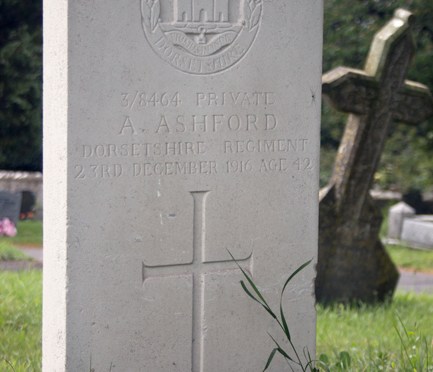
Private Ashford

Arthur James Ashford was born in the Dorset village of Okeford Fitzpaine, to John and Tryphina Ahford. His father died when Arthur was only seven years old, leaving Tryphina to raise him and his three siblings.

Arthur had had a military career before the start of the Great War. He had enlisted into the Dorsetshire Regiment in 1891 and, while I have not been able to locate his records from that time, the regiment had been stationed in Ireland in the 1890s.

In 1899 he married Amy Upshall, at which point he was employed as a labourer. The couple had six children, though sadly, two of them – Arthur George and Elsie May – died in childhood.

He enlisted within months of the First World War beginning, returning to the Dorsetshire Regiment he had previously served on 30th September 1914. (It is interesting that on his enlistment papers he said that he had previously served for 12 years, although the dates don’t fully tally up.) This time, however, Private Ashford served on the Home Front, in Dorchester and Portland.

On the evening of 22nd December 1916, Arthur fell down a gulley in Portland. He was taken to the Verne Military Hospital in the town, but died of his injuries – a fractured skull – in the early hours of the following day.

Private Arthur Ashford was buried in his home village of Evercreech on Thursday 28th December 1916.


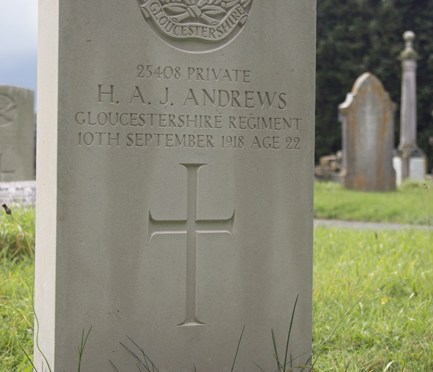
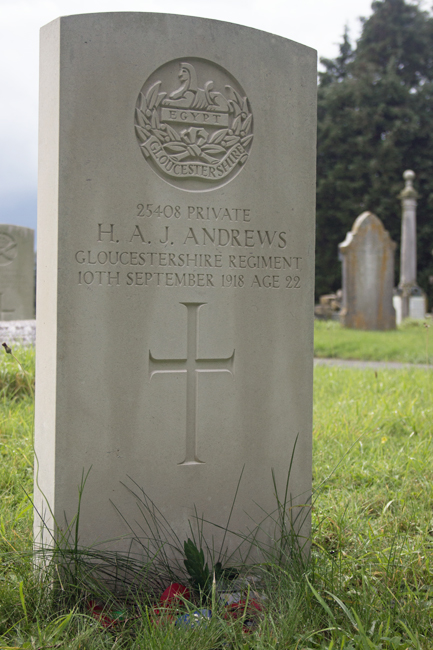
CWG: Private Herbert Andrews

Private Andrews

Herbert Andrews was born in July 1896, the eldest of seven children of Hugh (known as Henry) and Jane Andrews from Evercreech, Somerset.

By the time war broke out, Herbert was helping out on his grandfather’s farm in nearby Thornford. He enlisted into the army on 15th November 1915, joining the Gloucestershire Regiment.

Private Andrews served in France from March 1916, eventually spending eighteen months on the front line (not counting leave), and received a gun shot wound to the face on 27th August 1917. (He was treated in France, and remained there for a further five months.)

Herbert seems to be the only member of his family to have seen active service. His brother Norman was the only one of his siblings to have been old enough to enlist and, while he did so in 1917, he was assigned to the Experimental Company of the Royal Engineers, testing munitions and gases in Porton.

It appears that while Herbert was on leave in February 1918 he fell ill. Ultimately, he was discharged as medically unfit for service on 7th September.

Just three days later, Private Herbert Andrews passed away three days later, succumbing to a combination of chronic Bright’s disease and haemoptysis.


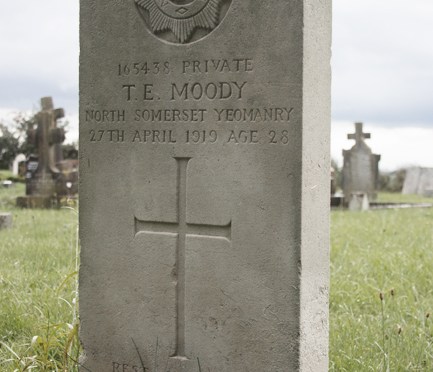
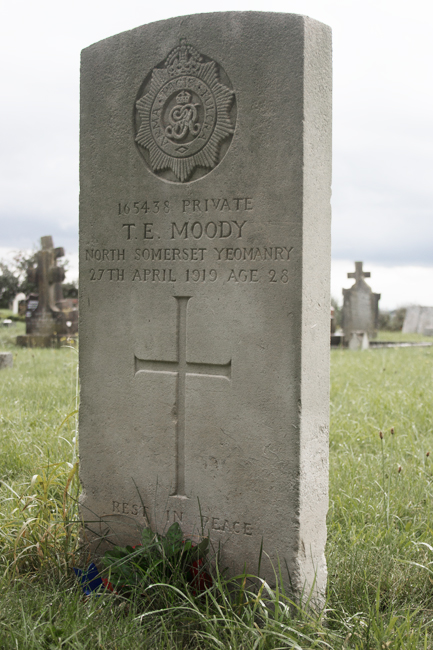
CWG: Private Thomas Moody

Private Moody

Thomas Edward Moody was born in 1890, the second of five children for Thomas and Emily.

By the start of the war, “Little Tommy Moody” was working with his father in the quarries around Shepton Mallet and was the eldest son living at home.

He joined the North Somerset Yeomanry and was shipped out to France, where he was badly injured. An article in the Shepton Mallet Journal, included after his funeral, says as much about the life of this young man as it does about the Edwardian approach to military matters.


DEATH AND FUNERAL OF A SOLDIER – The death has taken place of Thomas Edward Moody, son of Thomas Moody, of Stoney Stratton, Evercreech, at the age of 18, and who as a 1914 man, joined the North Somerset Yeomanry and went out to France. He was badly wounded, resulting in the loss of an eye, and after some time in hospital and a short leave at home, he was sent back to rejoin his regiment, the 3rd Reserve Cavalry, in France. This was about two years ago. He spent his last leave home at Christmas. After a time in hospital at Devonport, he was removed to Bath early last month, discharged from the army as incurable, and there he died on May 5th, the cause of death being consumption of the brain. The funeral, on Saturday afternoon last, was of military character. The corpse, brought from Bath the day before, was borne from the deceased’s home at Stratton on a hand bier, attended by a bearer party of eight men from Taunton Military Barracks, to the Parish Church, where the first portion of the service was taken. The Union Jack enshrouded the coffin, on and around which a number of floral tributes rested. Sixty members of the Evercreech Branch of the Comrades of the Great War, and a couple of marines, joined the funeral cortege at the home, and on leaving the Church lines up on wither side, as the body of their dead comrade was borne hence on the shoulders of four of their number to the cemetery. The vicar, Rev. RY Bonsey, officiated. The Last Post was sounded by Bugler Tucker, of Shepton Mallet, and another bugler from Tauton Barracks. “Little Tommy Moody”, as he was familiarly called amongst his chums, was a conspicuous member of the Evercreech Football Club previous to the War.

Shepton Mallet Journal – 9th May 1919.

(It is interesting to know that the date of death in the article does not match that on the gravestone. I would be inclined to believe the latter.)

Private Moody was obviously a fighter and a strong character – returning to the front after losing an eye, some time in hospital and a short leave – and you can guarantee he was missed in the village.

He lies at rest in Evercreech Cemetery.

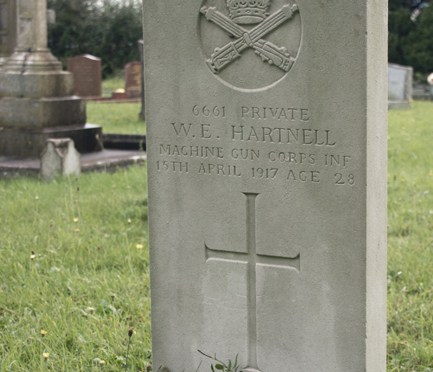
CWG: Private Walter Hartnell

Private Hartnell

Walter Ernest Hartnell was born in 1888 to William and Jane Hartnell in Charlton Musgrove, on the outskirts of Wincanton in Somerset.

One of eight children, it appears he could have been a bit of a tearaway in his youth; in October 1905, the Shepton Mallet Journal reports on a “Hobbledehoy Nuisance” in Evercreech, when a Walter Hartnell was caught with nine of his friends causing a disturbance close to the church.


They were shouting, racing after each other up and down the road, using obscene language, and smoking cigarettes. This continued till 7.15, about half an hour.

Shepton Mallet Journal – Friday 20th October 1905

Hartnell was fined 5/- and 2/6 costs, or would face ten days in prison.

Things looked up for Walter and, by the time his call to enlist came, he was working on the railways. He joined the Infantry branch of the Machine Gun Corps (MGC), while his brother Fred fought in the Royal Artillery.

The MGC was a particularly brutal part of the armed forces. Of the 170,500 officers and men who served in the corps, 62,049 became casualties, including 12,498 killed, earning it the nickname ‘the Suicide Club’.

Details of Private Hartnell’s death are sketchy; his company saw action at Ypres and Arras. However, records suggest that he died in Colchester; the Military Hospital there was used to dealing with troops straight from the Front. It is likely that he was injured at Ypres and shipped back home to recuperate, but died of his injuries.

This is all conjecture on my part, of course, but either way, Private Walter Hartnell lies at peace in a quiet Somerset cemetery.


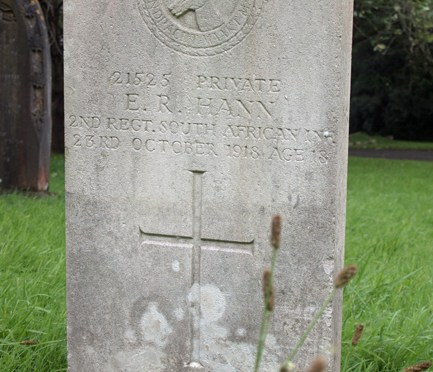
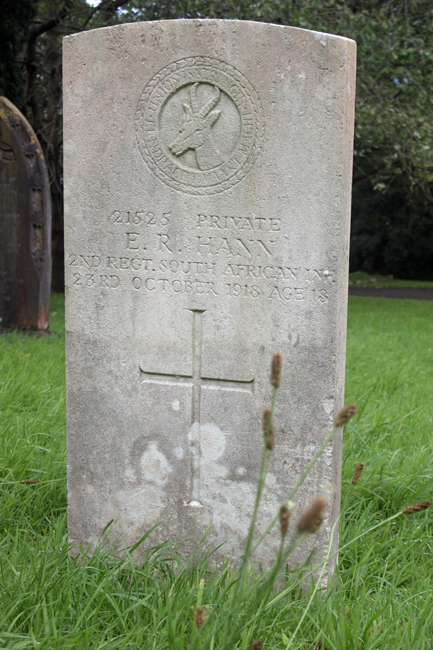
CWG: Private Edwin Hann

Edwin Robert Hann was born in Johannesburg, South Africa, to Albert Edward and Jemima Jane Hann in around 1900.

Research has led me to numerous dead ends regarding Edwin’s life. Hann’s tombstone shows that he enlisted in the 2nd Regiment of the South African Infantry.

The 2nd Regiment served in numerous key battled on the Western Front, including Ypres, Passchendale, Marrieres Wood and Messines. Their last major engagement was at Le Cateau in early October 1918. Given how soon afterwards Private Hann passed away, it seems possible that he was fatally wounded – or at least suffered trauma – during this battle.

His war pension records suggest that he died at a military hospital in Woking, Surrey. A little research suggests that, unless this was the medical wing of the local army barracks, then it is likely that Hann was treated at the former Brookwood Hospital (at the time known as Brookwood Asylum or the Surrey County Lunatic Asylum).

While I can find nothing concrete to confirm this, other Brookwood records suggest that fellow patients were either suffering the effects of shell shock or mustard gas. It is reasonable to assume, therefore, that Private Hann passed away as an indirect result of the fighting on the front, rather than a direct one.

A second mystery arises around his burial, however.

Born in South Africa, fighting on the Western Front, treated and passing in Surrey. How did Edwin Hann come to be buried in a cemetery in Glastonbury?

Again, I can only surmise why this poor teenager was buried so far from home. Hann is a fairly common name in Somerset and, from a bit of research on Ancestry.co.uk, at the turn of the last century there are a large number of Hanns in and around Glastonbury and Shepton Mallet, and in particular a lot of Alberts and Edwards (like Private Hann’s father). The assumption can only be, therefore, that Edwin came to be buried close to a where his father’s family lived.

https://www.findagrave.com/memorial/146326981/edwin-robert-hann


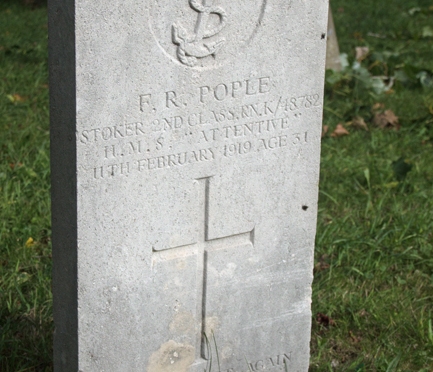
CWG: Stoker Frederick Pople

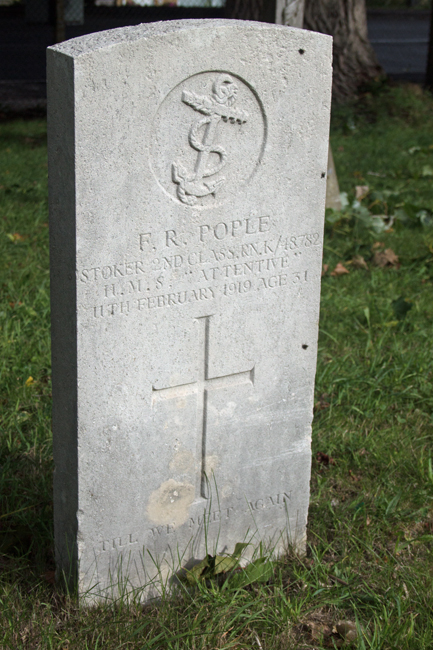
Frederick Richard Pople was the second son of Frederick and Emma Pople, born in 1887 in Street, Somerset. He married Beatrice Cox in 1910 and, by the following year the newlyweds had moved to South Wales, when Frederick wound work on the railways.

Frederick joined relatively late into the war – he was 30 when he enlisted on 25th January 1918. He training took place at HMS Vivid II in Devonport and, by March of that year, he was serving as a stoker on the HMS Attentive III, part of the Dover patrol.

Sady, Stoker Pople’s service was short-lived. While he continued to work on the HMS Attentive after the conclusion of hostilities in November 1918, passed away from pneumonia on 11th February 1919. He is buried in Glastonbury Cemetery.

https://www.findagrave.com/memorial/146327274/frederick-richard-pople


CWG: Private Stanley Counsell

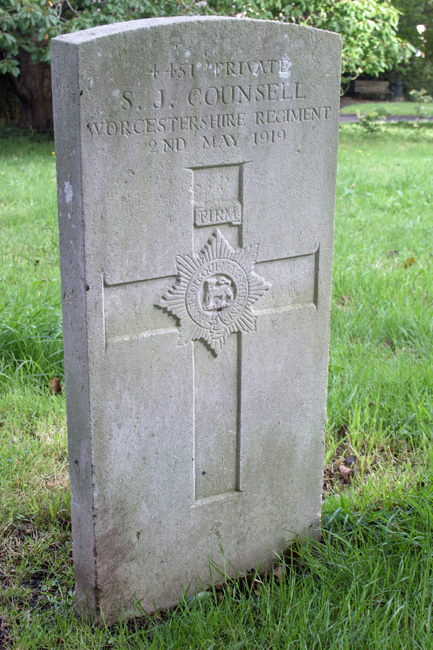
Stanley John Counsell was born in September 1896 to George and Ellen, farmers in Glastonbury.

The youngest of five children, Stanley was an apprentice carpenter by the time he enlisted with his brothers Lawrence and Wilfred.

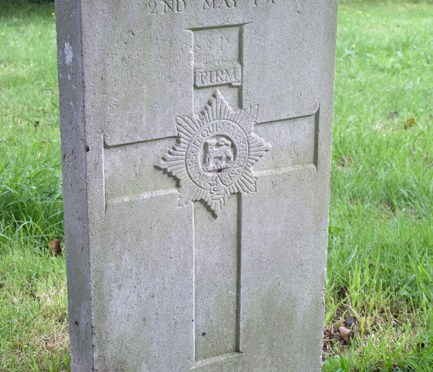
Private Counsell joined the Worcestershire Regiment in 1915 and was sent into action in France in September 1916.

He suffered medically during the war, succumbing to tonsillitis and diarrhoea during his time in France. A bout of tuberculosis in late 1918 saw Stanley shipped back to the UK and admitted to a hospital in Newcastle-upon Tyne.

The end of the Great War came and went, and Stanley was finally discharged from the army in March 1919, as he was no longer medically fit for war service.

On 2nd May 1919, less than six weeks after being discharged, Private Stanley Counsell passed away. He was a victim not of the war, but of the subsequent influenza pandemic, which killed 250,000 people in the UK alone.

https://www.findagrave.com/memorial/146326854/stanley-john-counsell


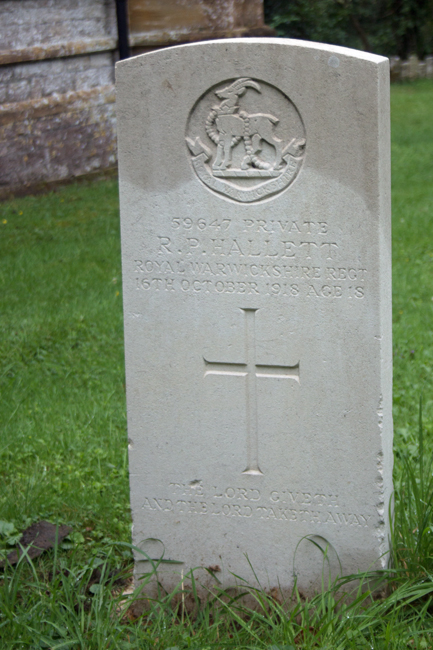
CWG: Private Roberts Hallett

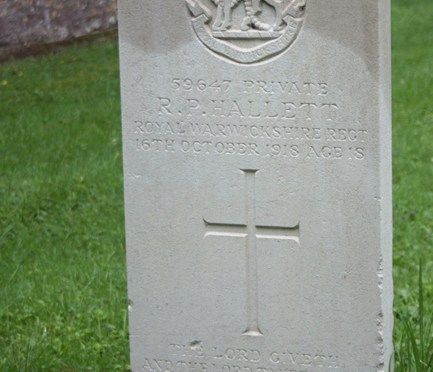
Private Roberts Pretoria Hallett was born in the summer of 1900, to Frank – a shepherd from Charlton Adam – and Emily, who came from Charlton Mackrell. Roberts (the correct spelling) was the youngest of eleven children.

Roberts was just twelve when his father died, and, when war came, he enlisted in Taunton, along with his brothers, Francis and William. The Great War was not kind to Emily Hallett: her son William died while fighting in India in 1916; Francis died in the Third Battle of Ypres in June 1917.

Roberts was assigned to the 5th Battalion Royal Warwickshire Regiment; while I’ve been unable to identify exactly when he saw battle, by the last year of the war he would have been involved in the fighting in northern Italy.

What we can say for certainty was that is was shipped home at some point towards the end of the war, and died – presumably of his injuries – in Newcastle-upon-Tyne on 16th October 1918.

William Hallett was buried in India, Francis in Belgium. Private Roberts Hallett, therefore, is the only one of the three brothers to be buried in the churchyard of St Mary’s in his birthplace of Charlton Mackrell.

https://www.findagrave.com/memorial/203685613