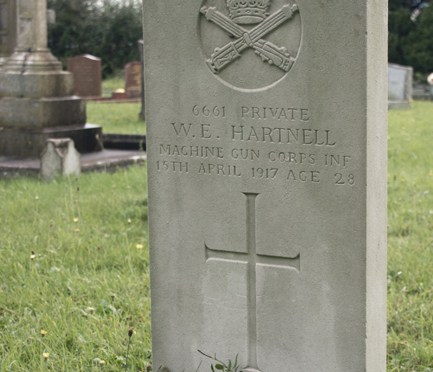
Walter Ernest Hartnell was born in 1888 to William and Jane Hartnell in Charlton Musgrove, on the outskirts of Wincanton in Somerset.
One of eight children, it appears he could have been a bit of a tearaway in his youth; in October 1905, the Shepton Mallet Journal reports on a “Hobbledehoy Nuisance” in Evercreech, when a Walter Hartnell was caught with nine of his friends causing a disturbance close to the church.
They were shouting, racing after each other up and down the road, using obscene language, and smoking cigarettes. This continued till 7.15, about half an hour.
Shepton Mallet Journal – Friday 20th October 1905
Hartnell was fined 5/- and 2/6 costs, or would face ten days in prison.
Things looked up for Walter and, by the time his call to enlist came, he was working on the railways. He joined the Infantry branch of the Machine Gun Corps (MGC), while his brother Fred fought in the Royal Artillery.
The MGC was a particularly brutal part of the armed forces. Of the 170,500 officers and men who served in the corps, 62,049 became casualties, including 12,498 killed, earning it the nickname ‘the Suicide Club’.
Details of Private Hartnell’s death are sketchy; his company saw action at Ypres and Arras. However, records suggest that he died in Colchester; the Military Hospital there was used to dealing with troops straight from the Front. It is likely that he was injured at Ypres and shipped back home to recuperate, but died of his injuries.
This is all conjecture on my part, of course, but either way, Private Walter Hartnell lies at peace in a quiet Somerset cemetery.
A hop and a skip away from Dinder is a bit of a jolt; the population of Evercreech is ten times the size, and you do notice it.
Just to the south of Shepton Mallet, this has the potential to be a bustling place, although the day I visited was a typically English summer, with heavy showers, so it was quieter than it could have been.
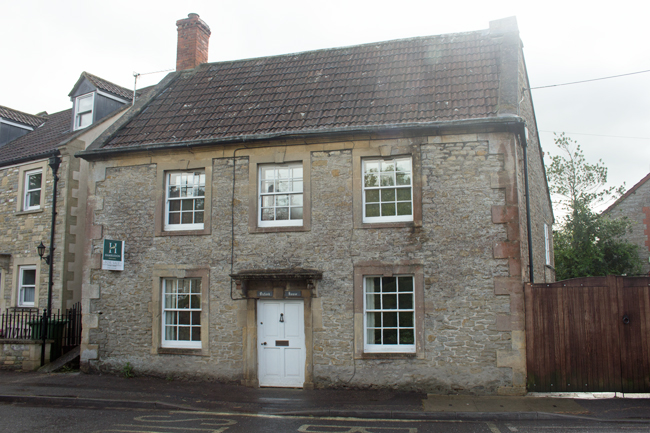
The centre of the village holds onto its Norman roots – Evrecriz was mentioned in the Doomsday book – and the buildings are old stone cottages, with the occasional larger manor thrown in.
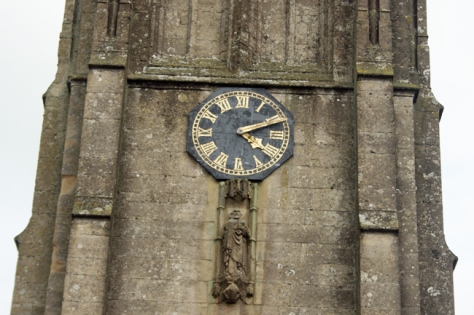
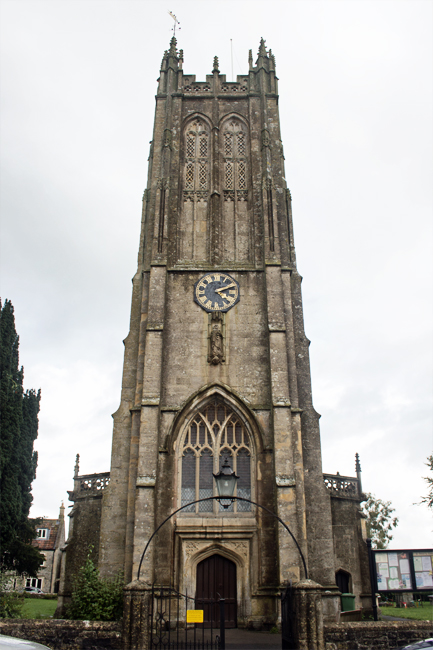
The church, however, is one of the things that drew me to choosing this as my ‘E’ village. The renowned twentieth century architectural historian Nikolaus Pevsner said than it has one of the finest Somerset-style towers in the county, but it is the mysterious clock that interested me.
The face of the clock has no 10 on it (or no X, in Roman numerals). Instead, the numbers go 9 – 11 – 12 – 12 (IX – XI – XII – XII).
Local rumour suggests that the person who paid for the clock to be made was instructed by his wife that he had to be home from the pub by 10 o’clock. Therefore, he ensured that the 10 o’clock numeral (X) was missing from the clock face.
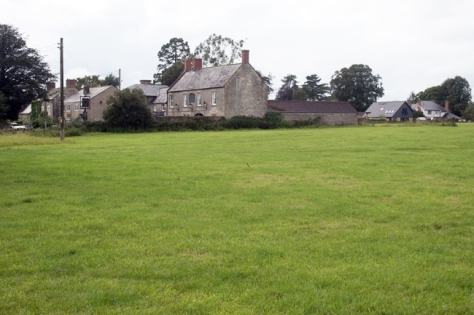
While the village is a large one – with a population of nearly 2,500 – it is very easy to get into the open countryside.
Walk past the Bell Inn, one of Evercreech’s three pubs, and you find yourself crossing open fields to reach the village’s cemetery.
A small graveyard, but still in regular use, this holds a history of its own.
There is a war memorial to those who fell in both World Wars, while there are four war graves to those whose remains were able to be buried on English soil. Four stories, which I’ll explore in later posts.
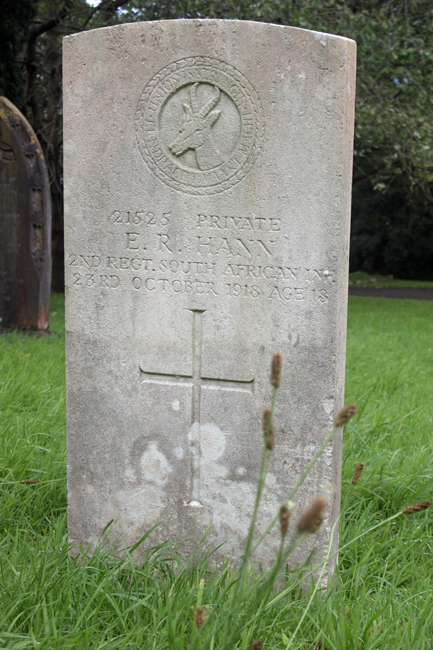
Edwin Robert Hann was born in Johannesburg, South Africa, to Albert Edward and Jemima Jane Hann in around 1900.
Research has led me to numerous dead ends regarding Edwin’s life. Hann’s tombstone shows that he enlisted in the 2nd Regiment of the South African Infantry.
The 2nd Regiment served in numerous key battled on the Western Front, including Ypres, Passchendale, Marrieres Wood and Messines. Their last major engagement was at Le Cateau in early October 1918. Given how soon afterwards Private Hann passed away, it seems possible that he was fatally wounded – or at least suffered trauma – during this battle.
His war pension records suggest that he died at a military hospital in Woking, Surrey. A little research suggests that, unless this was the medical wing of the local army barracks, then it is likely that Hann was treated at the former Brookwood Hospital (at the time known as Brookwood Asylum or the Surrey County Lunatic Asylum).
While I can find nothing concrete to confirm this, other Brookwood records suggest that fellow patients were either suffering the effects of shell shock or mustard gas. It is reasonable to assume, therefore, that Private Hann passed away as an indirect result of the fighting on the front, rather than a direct one.
A second mystery arises around his burial, however.
Born in South Africa, fighting on the Western Front, treated and passing in Surrey. How did Edwin Hann come to be buried in a cemetery in Glastonbury?
Again, I can only surmise why this poor teenager was buried so far from home. Hann is a fairly common name in Somerset and, from a bit of research on Ancestry.co.uk, at the turn of the last century there are a large number of Hanns in and around Glastonbury and Shepton Mallet, and in particular a lot of Alberts and Edwards (like Private Hann’s father). The assumption can only be, therefore, that Edwin came to be buried close to a where his father’s family lived.
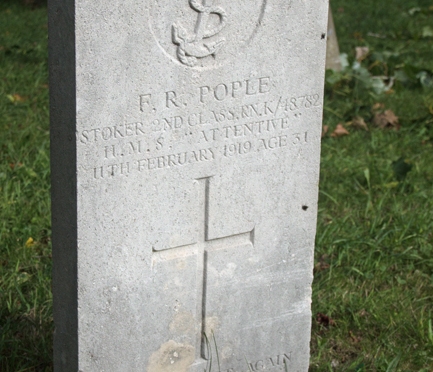
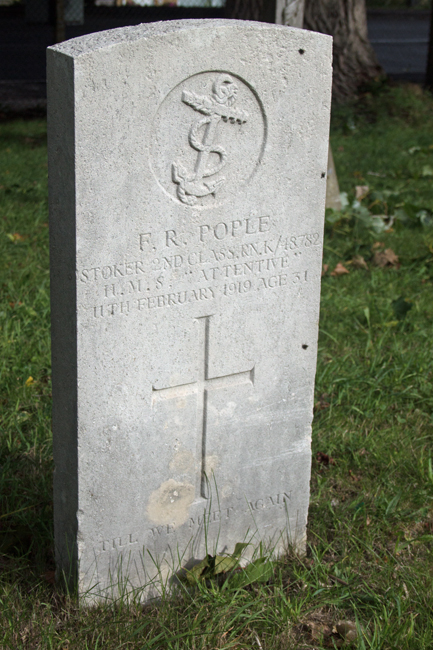
Frederick Richard Pople was the second son of Frederick and Emma Pople, born in 1887 in Street, Somerset. He married Beatrice Cox in 1910 and, by the following year the newlyweds had moved to South Wales, when Frederick wound work on the railways.
Frederick joined relatively late into the war – he was 30 when he enlisted on 25th January 1918. He training took place at HMS Vivid II in Devonport and, by March of that year, he was serving as a stoker on the HMS Attentive III, part of the Dover patrol.
Sady, Stoker Pople’s service was short-lived. While he continued to work on the HMS Attentive after the conclusion of hostilities in November 1918, passed away from pneumonia on 11th February 1919. He is buried in Glastonbury Cemetery.
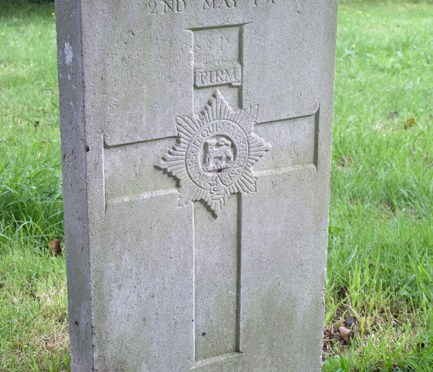
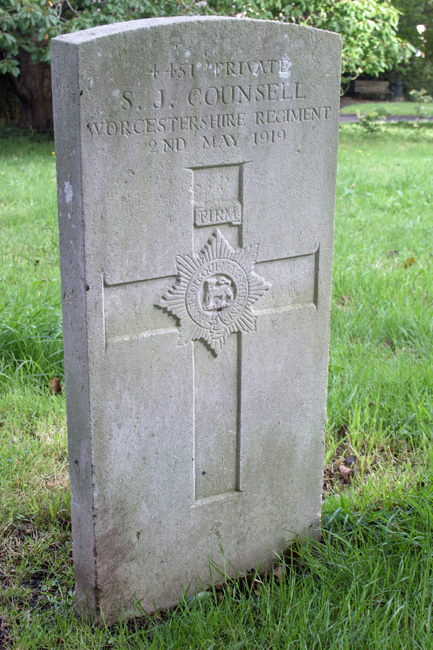
Stanley John Counsell was born in September 1896 to George and Ellen, farmers in Glastonbury.
The youngest of five children, Stanley was an apprentice carpenter by the time he enlisted with his brothers Lawrence and Wilfred.
Private Counsell joined the Worcestershire Regiment in 1915 and was sent into action in France in September 1916.
He suffered medically during the war, succumbing to tonsillitis and diarrhoea during his time in France. A bout of tuberculosis in late 1918 saw Stanley shipped back to the UK and admitted to a hospital in Newcastle-upon Tyne.
The end of the Great War came and went, and Stanley was finally discharged from the army in March 1919, as he was no longer medically fit for war service.
On 2nd May 1919, less than six weeks after being discharged, Private Stanley Counsell passed away. He was a victim not of the war, but of the subsequent influenza pandemic, which killed 250,000 people in the UK alone.
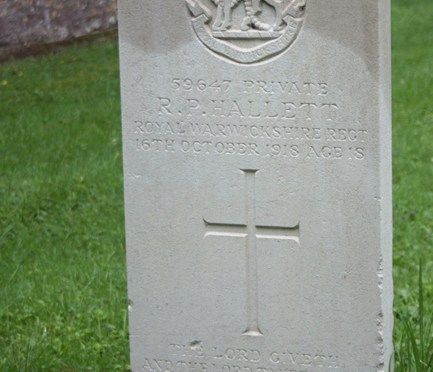
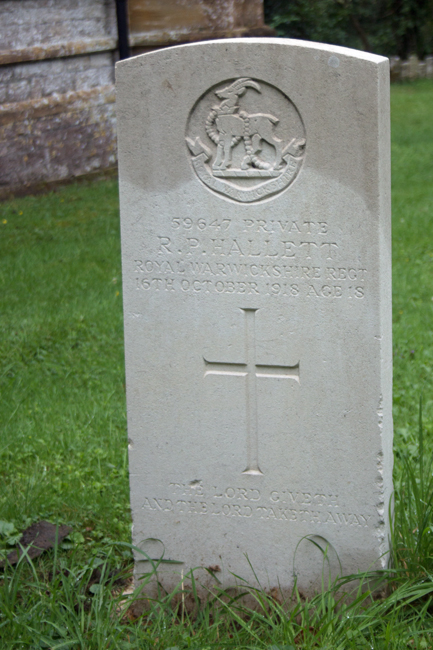
Private Roberts Pretoria Hallett was born in the summer of 1900, to Frank – a shepherd from Charlton Adam – and Emily, who came from Charlton Mackrell. Roberts (the correct spelling) was the youngest of eleven children.
Roberts was just twelve when his father died, and, when war came, he enlisted in Taunton, along with his brothers, Francis and William. The Great War was not kind to Emily Hallett: her son William died while fighting in India in 1916; Francis died in the Third Battle of Ypres in June 1917.
Roberts was assigned to the 5th Battalion Royal Warwickshire Regiment; while I’ve been unable to identify exactly when he saw battle, by the last year of the war he would have been involved in the fighting in northern Italy.
What we can say for certainty was that is was shipped home at some point towards the end of the war, and died – presumably of his injuries – in Newcastle-upon-Tyne on 16th October 1918.
William Hallett was buried in India, Francis in Belgium. Private Roberts Hallett, therefore, is the only one of the three brothers to be buried in the churchyard of St Mary’s in his birthplace of Charlton Mackrell.
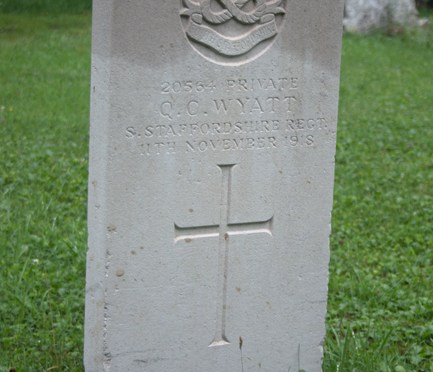
Private Quinton Charles Wyatt was born in the Gloucestershire town of Northleach in 1893 to William and Elizabeth. His mother died when he was a toddler and, by the time war was declared, Quinton was working as a farm labourer and waggoner.
He joined the 8th Battalion of the South Staffordshire Regiment on 22nd November 1915. He was posted to France four months later, but medically discharged from the Army on Boxing Day 1917.
Private Wyatt died in Charlton Mackrell on 11th November 1918 – Armistice Day – and buried in St Mary’s churchyard.
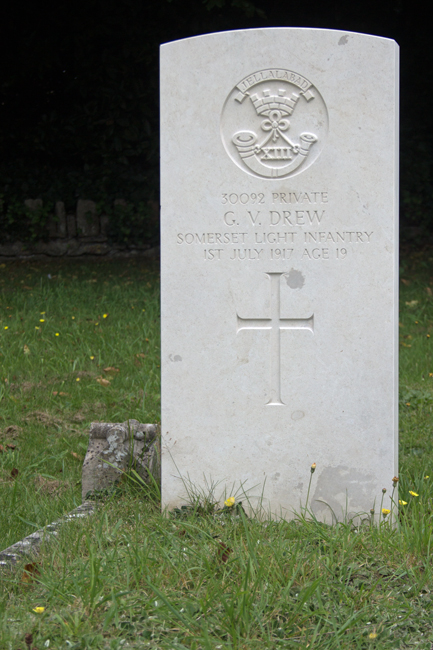
Gilbert Victor Drew was born in Dinder, Somerset in 1898, the youngest of the eight children of James and Theresa Drew, a groom/coachman and laundress respectively.
He enlisted 11th December 1915 and joined the 1st Batallion Somerset Light Infantry. While I have been unable to fond any specific details, Private Gilbert would have seen action on the Western Front. He was discharged from the army on 3rd February 1917 as, according to the records, he was “no longer physically fit for war service.”
Private Gilbert Victor Drew died on 1st July 1917, and was buried in the graveyard of the Church of St Michael in his home village.
He was one of six villagers to fall during the Great War.
Moving on through the highways and byways of Somerset, the next destination is the village of Dinder.
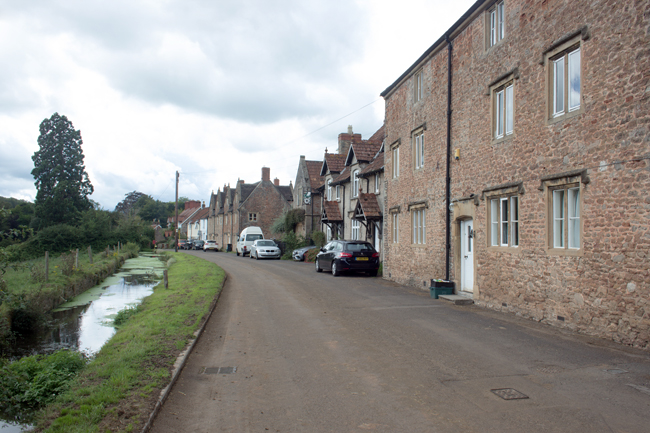
Literally meaning “the house in the valley”, Dinder lies three miles east of Wells and is nestled alongside the River Sheppey.
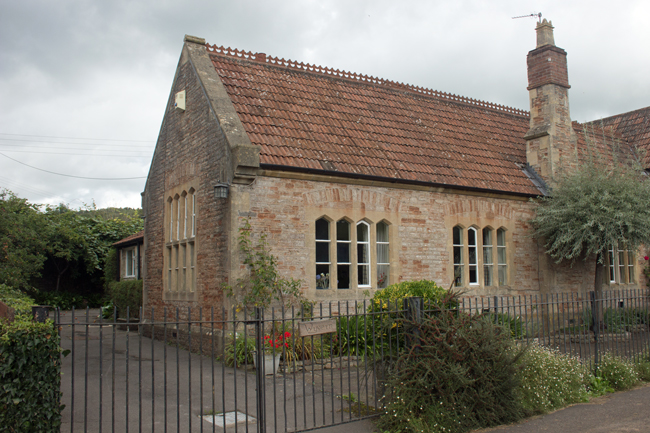
The village is smaller than Ashcott, Baltonsborough and Charlton Mackrell, and has a population of less than 200 people. There are no shops, pub or school, and the three farms – Higher Farm, Lower Farm and Sharcombe Farm – are interspersed with the houses of those who farmed them.
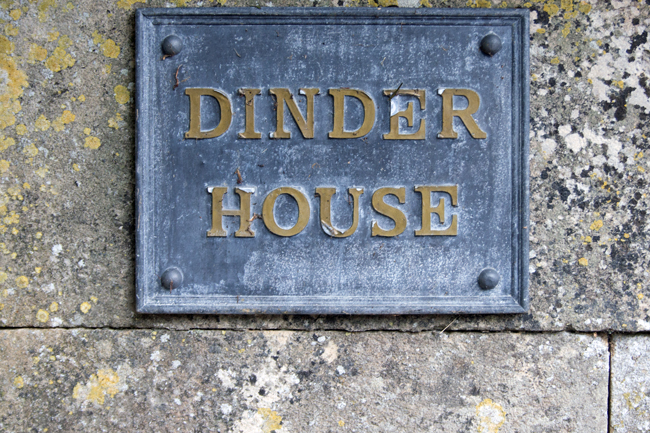
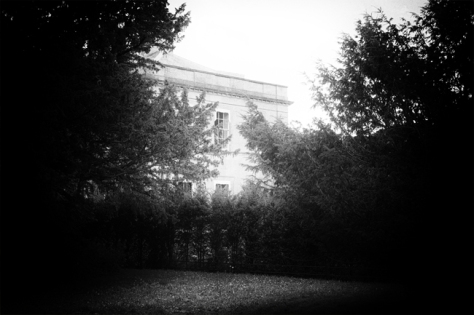
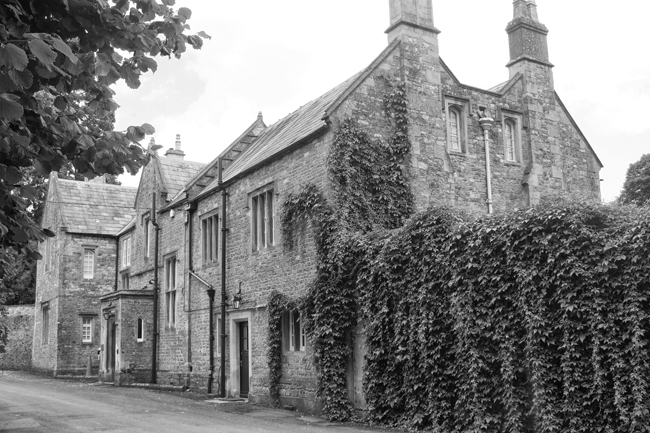
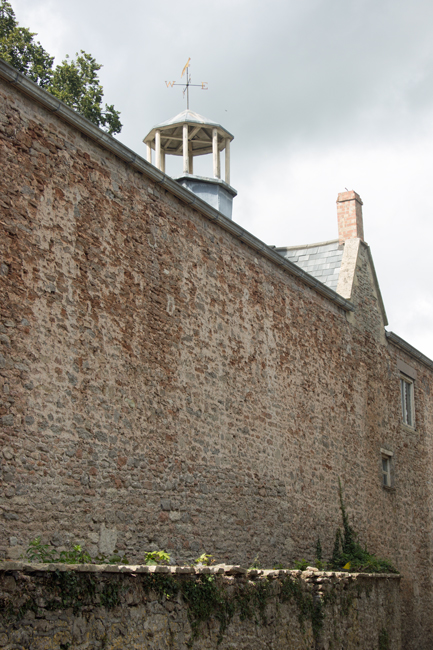
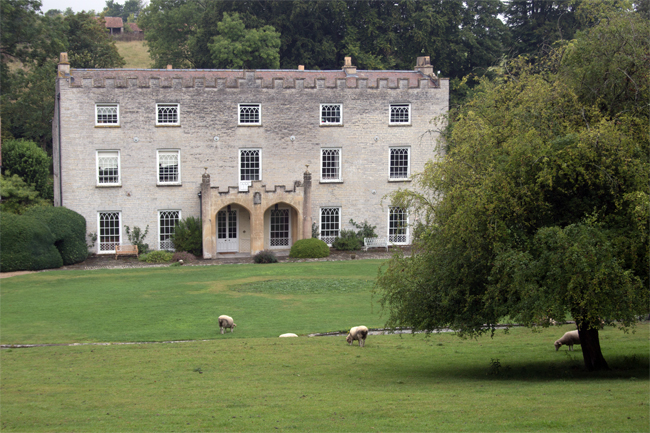
Not all of the houses are farmworkers cottages, of course. The “house in the valley” is Dinder House itself, shielded from prying eyes by a series of high walls and enveloping trees.
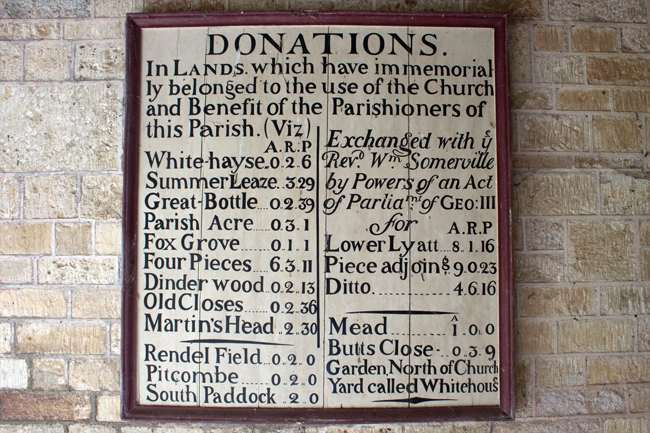
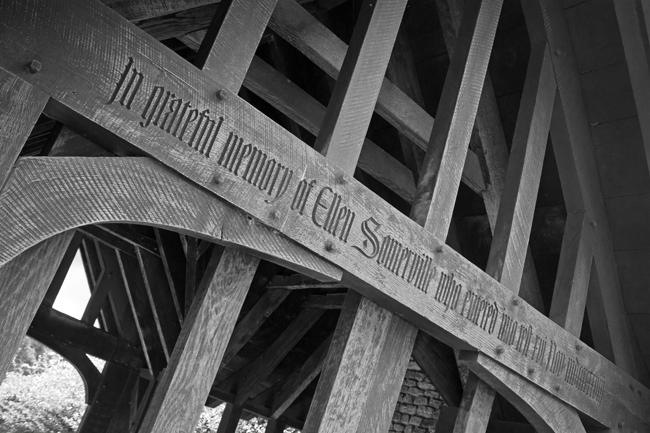
The house – built in 1801 – replaced the previous manor house and was designed and constructed by the Somerville family, who owned the manor and estate. Although the family line ended in 1949, the Somervilles are recognised and commemorated throughout the village, for everything they brought and gave to the village.
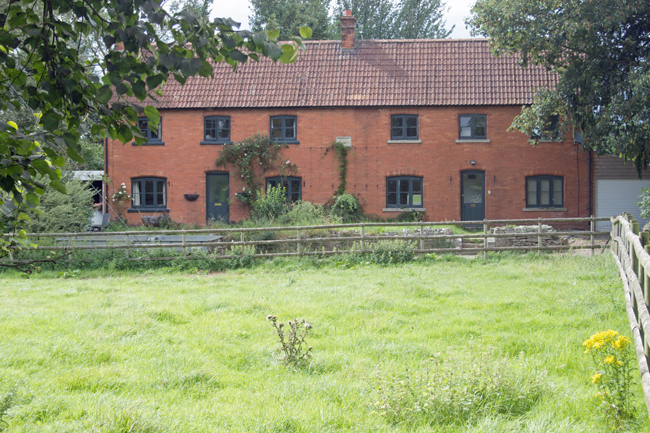
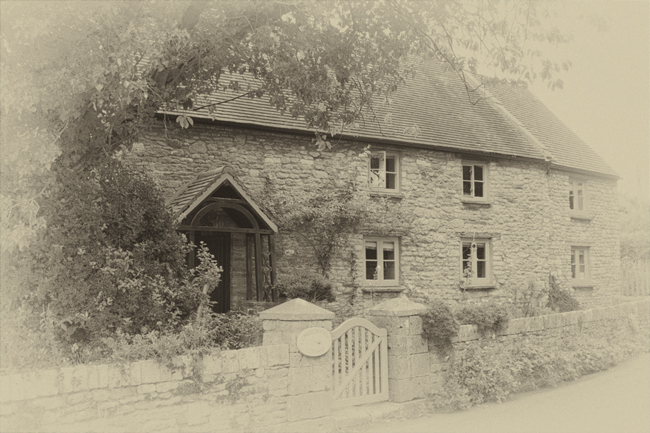
The other houses in the village are a mixture of styles, but all showing an age and giving off an air of respectability.
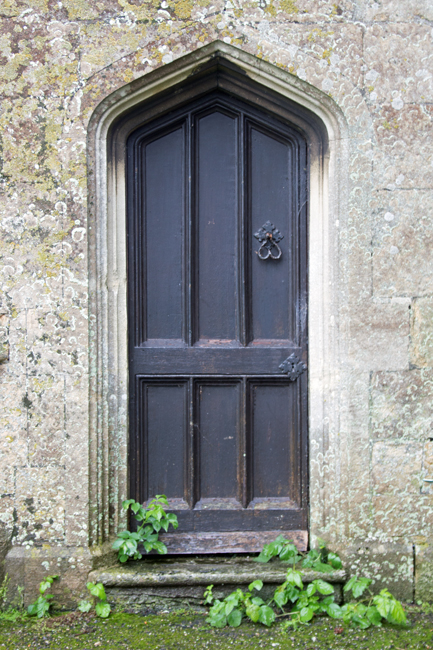
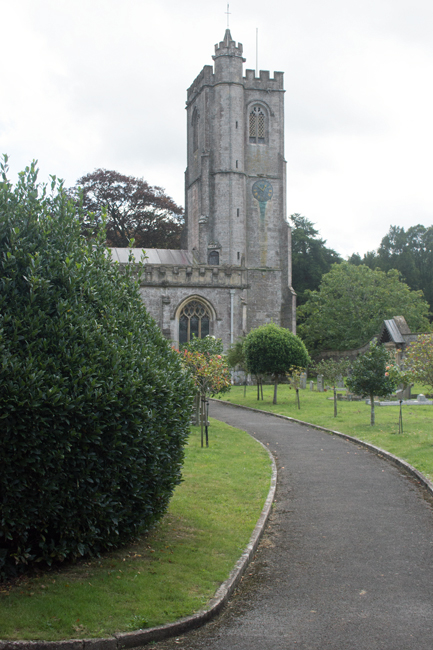
Dinder’s parish church – St Michael and All Angels – is a typically English affair; while it was locked on the day I visited, it seemed warm, welcoming and peaceful in the extreme, with an open churchyard, sitting alongside the manorial house.
Sadly, Dinder was not without its share of wartime losses; this is underlined in the churchyard, where a grave commemorates Private GV Drew of the Somerset Light Infantry.
Gilbert Victor Drew was born in 1898, the youngest of the eight children of James and Theresa Drew, a groom/coachman and laundress respectively.
He enlisted 11th December 1915 and joined the 1st Batallion Somerset Light Infantry. While I have been unable to fond any specific details, Private Gilbert would have seen action on the Western Front. He was discharged from the army on 3rd February 1917 as, according to the records, he was “no longer physically fit for war service.”
Private Gilbert Victor Drew died on 1st July 1917, and was buried in the graveyard of the Church of St Michael in his home village. He was one of six villagers to fall during the Great War.
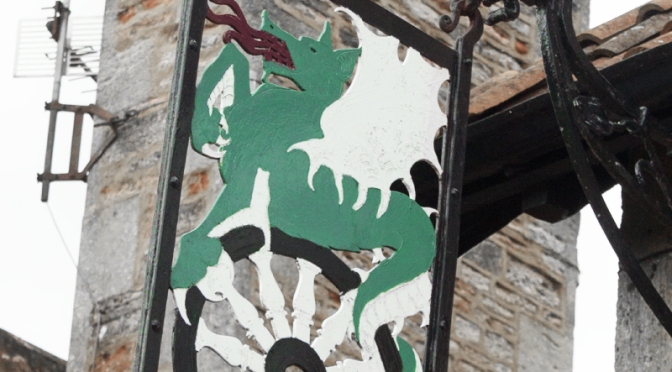
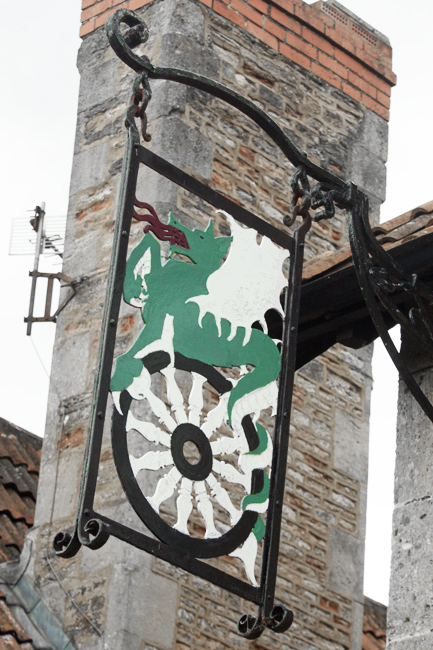
Dinder also has hints of a more mythological past too. One of the houses on River Road has an iron sign hanging outside; this is the Somerville family crest, a green dragon breathing fire.
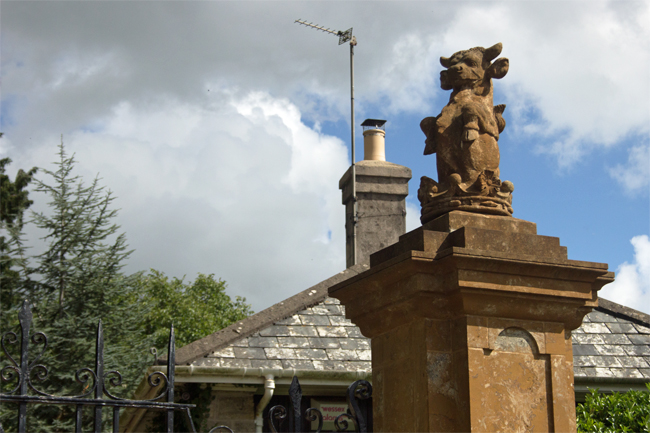
The dragon is replicated around the village, from finials on houses roofs to a crest within the church and the tale of the Dinder Worm is one that dates back to the early 1200s.
A terrible dragon was terrorising the villagers and their livestock, and Bishop Jocelyn of Wells was called upon to save them. He rode out to encounter the beast with his soldiers, but at the last minute commanded them to remain at a distance while he rode on and single-handedly beheaded the Worm, saving the village from certain disaster.
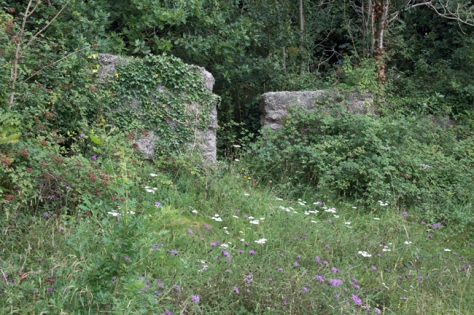
To the north of the village, a series of mysterious concrete blocks lie alongside country lanes. These are tank traps, and formed a part of the defensive protection for the area during the Second World War.
According to records, an anti tank ditch was dug round Wells and Dinder, circling Maesbury Ring. Bent railway lines were stuck into slots in the road to stop armoured vehicles and clusters of concrete blocks were cast to keep the enemy tanks where the defenders could see and hit them.
One of the things I have found since moving down to Somerset how different the place names are from back in the south east of England. For every Yeovil there is a Kingsbury Epicopi, for every Bridgwater, a Chiltern Cantelo. The etymology of these place names holds a constant fascination for me, and is another reason I have set out to explore the local area more.
So it is that, on reaching the letter C in my quest, that I choose an unusually named village to photograph.
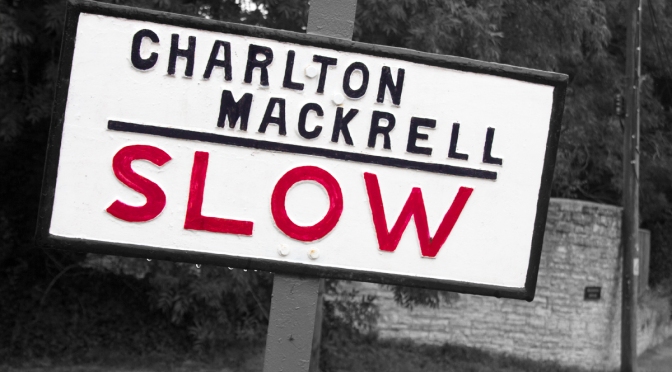
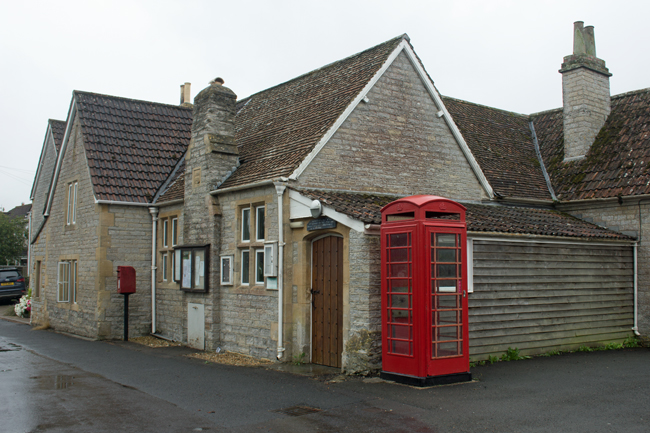
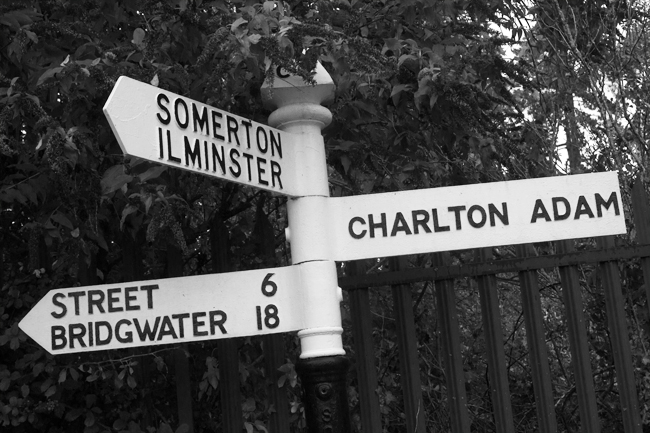
Charlton Mackrell lies midway between Glastonbury and Yeovil, on Bull Brook, a tributary of the River Cary. It shares its name with the neighbouring village – the similarly named Charlton Adam – and, like Baltonsborough, has a population of around 1000 inhabitants.
The names of the villages can be traced back centuries – Charlton comes from the Saxon word for “farmstead of the freemen”. Adam can be pinpointed to the local FitzAdam family who once lived there. Mackrell is less easy to pin down, but it is likely to have similar origins.
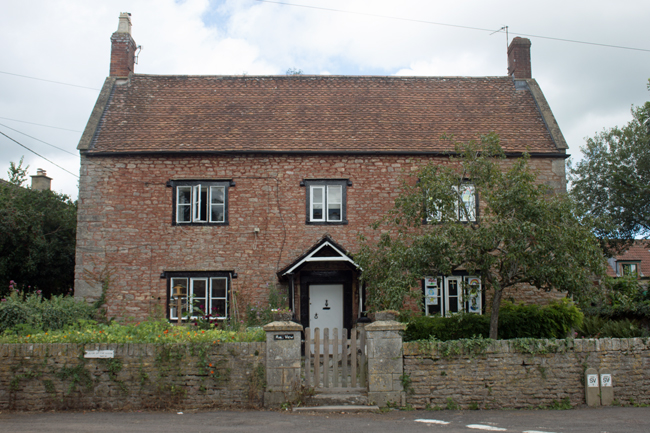
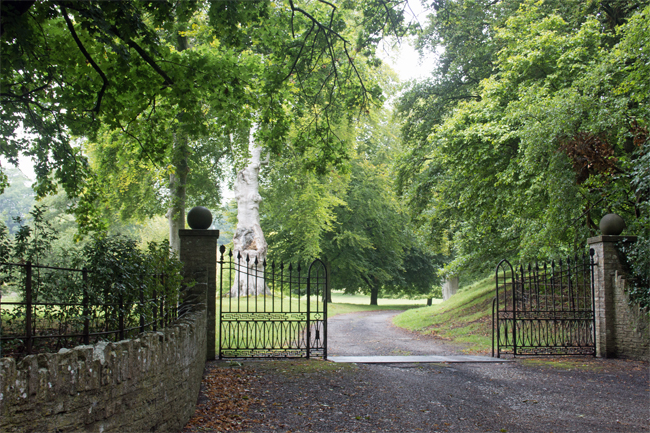
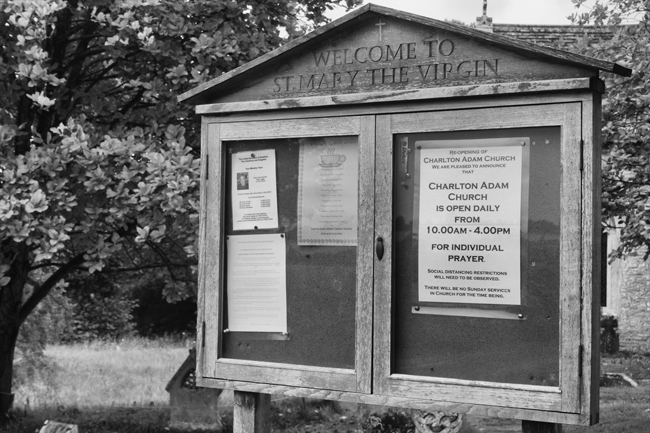
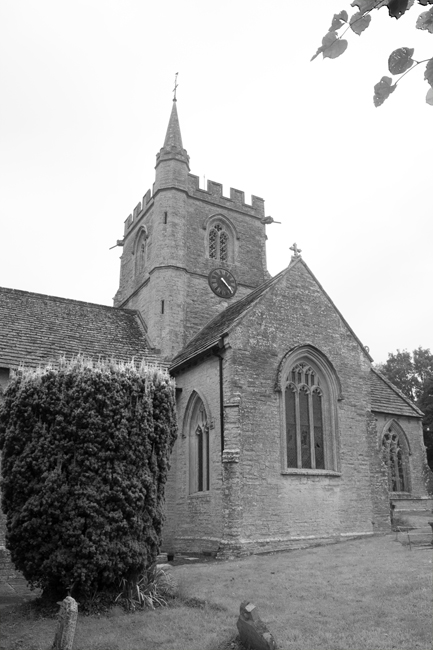
Certainly manorial buildings rule over the village in the way they tend to do; large houses and mysterious gated entrances can be found all over. The local church – Saint Mary The Virgin – sits right next to, and is obviously connected to, one of the larger properties (after all, manorial families often built religious buildings out of their own money to show their devotion to God, which just happened to help them control the local population).
The Charltons also suffered at the hands of Dr Beeching; the railway station closed in 1962, along with the other six stations between Castle Cary and Taunton. Three railway bridges survive, however, the lowest of which is only 2.7m (8’9″) high.
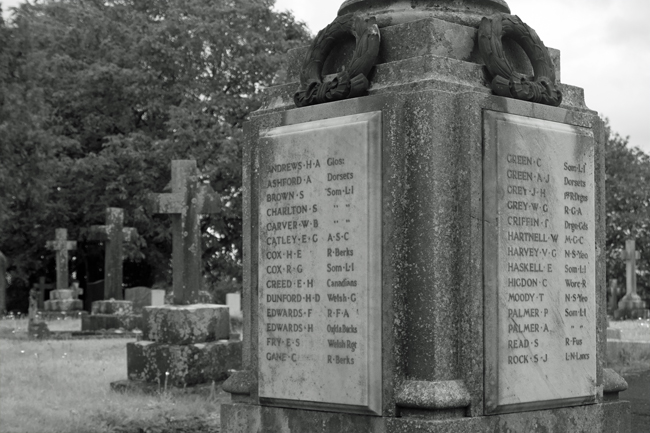
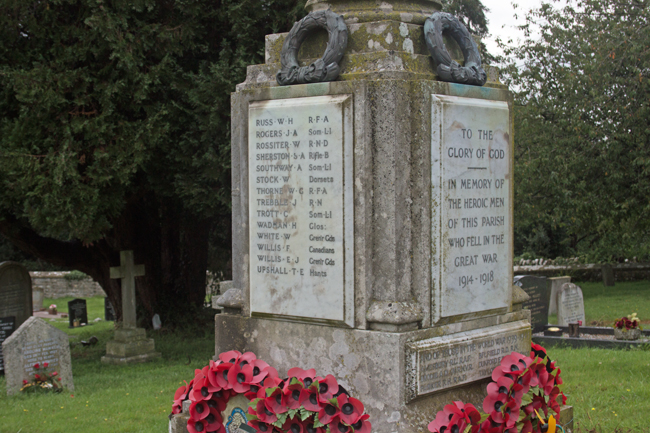
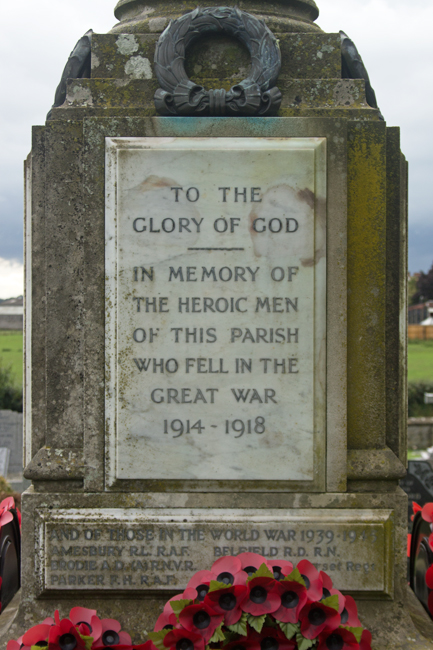
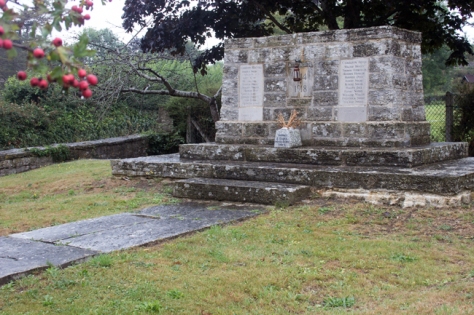
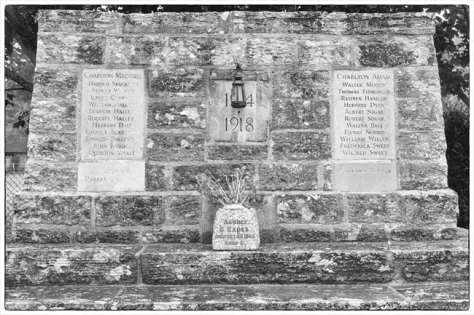
The villages’ war memorial is, unusually, not at the heart of things. It is, instead, nestled in a fork in the road joining the Charltons. Sadly, it only serves to highlight that, even in the depths of the Somerset countryside, tight knit communities were in no way immune to the ravages of war.
There are, thankfully, only eleven names of the lost under each of the villages, but given that the combined population of the two villages at the time was around 600, these twenty-two fallen represented an unthinkable loss for those left behind.
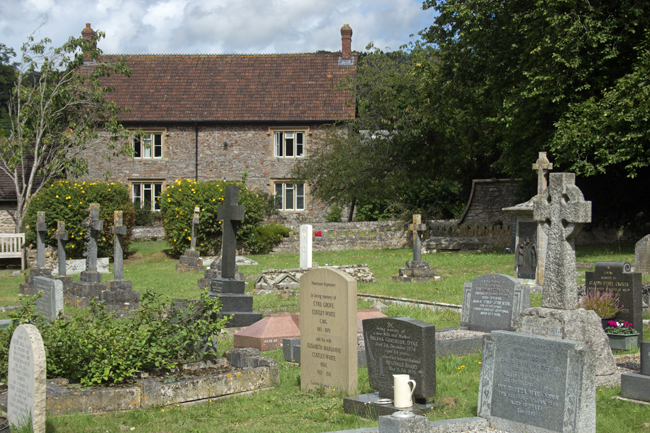
Two of the men on the Mackrell side of the memorial are buried in St Mary’s churchyard. If you have followed my previous CKPonderings blog, you will know that the history and stories behind those who fell during the Great War fascinate me.
Private Quinton Charles Wyatt was born in the Gloucestershire town of Northleach in 1893 to William and Elizabeth. His mother died when he was a toddler and, by the time war was declared, Quinton was working as a farm labourer and waggoner.
He joined the 8th Battalion of the South Staffordshire Regiment on 22nd November 1915. He was posted to France four months later, but medically discharged from the Army on Boxing Day 1917.
Private Wyatt died in Charlton Mackrell on 11th November 1918 – Armistice Day – and buried in St Mary’s churchyard.
Private Roberts Pretoria Hallett was born in the summer of 1900, to Frank – a shepherd from Charlton Adam – and Emily, who came from Charlton Mackrell. Roberts (the correct spelling) was the youngest of eleven children.
Roberts was just twelve when his father died, and, when war came, he enlisted in Taunton, along with his brothers, Francis and William. The Great War was not kind to Emily Hallett: her son William died while fighting in India in 1916; Francis died in the Third Battle of Ypres in June 1917.
Roberts was assigned to the 5th Battalion Royal Warwickshire Regiment; while I’ve been unable to identify exactly when he saw battle, by the last year of the war he would have been involved in the fighting in northern Italy.
What we can say for certainty was that is was shipped home at some point towards the end of the war, and died – presumably of his injuries – in Newcastle-upon-Tyne on 16th October 1918.
William Hallett was buried in India, Francis in Belgium. Private Roberts Hallett, therefore, is the only one of the three brothers to be buried in the churchyard of St Mary’s in his birthplace of Charlton Mackrell.





























 CKPonderingsToo