Tag Archives: Great War

CWG: Private William Earrey

This blog has focused a lot on the Commonwealth War Graves I have found on my travels around (initially Somerset) churchyards.

One of my other hobbies is family history, and I have uncovered a number of my ancestors who fell in the Great War. None that have researched so far did so on home soil, however, and so they are not buried in the UK.

It is only fitting, though, that I commemorate their loss here too.


William George Earrey was born in 1900, the eldest of three children to William George and Rosina Earrey. While he was baptised William George, later records – including those for his military service – show him as George William; presumably this had avoided any confusion with his father as the young William was growing up.

William Sr worked as a ships boiler maker and, while they appear somewhat disparate over the census records, the Earreys were based in Gillingham, Kent. (Given his employment, this would ensure William Sr’s proximity to the dockyard in Chatham.)

While his enlistment records are not readily available, William Jr appears to have signed up as soon as his age allowed. He enlisted in the Surrey Yeomanry and was shipped to Ireland, where the regiment has two reserve bases.

On 10th October 1918, William was returning home on leave from Ireland. He was one of 500 military personnel on board the RMS Leinster, which also had around 200 civilian passengers and 77 crew on board. Just after 10am the ship was around Kish Bank, just off the coast from Dublin, when passengers reported seeing a torpedo pass just in front of the ship’s bow. This was quickly followed by a second torpedo, which hit the ship on the port side. While it was being turned about to seek shelter back in port, a third torpedo struck, causing an explosion and the RMS Leinster sank.

The crew had managed to launch a number of lifeboats, while other passengers were able to get into the sea, clutching life rafts. Many people – William included – died during the sinking, while some of the survivors also subsequently perished.

The exact number of dead in the torpedoing of the RMS Leinster is not known, but it is estimated that at least 560 souls were lost, making it the biggest maritime disaster in the Irish Sea.

Newspapers of the time heralded the nation’s uproar at such a maritime tragedy – the sinking of the Leinster was the largest loss of life at sea around the British coast since the Lusitania three years earlier. The Derry Journal reported on the ‘fiendish crime’, that had occurred as a result of the ‘German policy of frightfulness at sea’.

The article went on to describe some of the challenges facing Dublin in the immediate aftermath of the disaster.

Owing to a strike in the undertaking trade, considerable difficulty is experienced in making arrangements for the burial of the victims. There is an insufficiency of coffins in Dublin, and all but three posting establishments are closed. The Lord Mayor is endeavouring to arrange the suspension of the strike till the Leinster victims are buried. It is stated that on a very rough estimate about three hundred bodies have been recovered…

Derry Journal: Monday 14th October 1918

Sadly, William Earrey’s body was not one of those to have been recovered; this undoubtedly left a lack of closure for his family at the lost of their young son.

Private Earrey is commemorated at the Hollybrook War Memorial in Southampton.


William George Earrey was my first cousin twice removed.


For the stories of more of the fallen from the Great War, take a look at my Commonwealth War Graves page.
CWG: Corporal Sidney Hornby

This blog has focused a lot on the Commonwealth War Graves I have found on my travels around (initially Somerset) churchyards.

One of my other hobbies is family history, and I have uncovered a number of my ancestors who fell in the Great War. None that have researched so far did so on home soil, however, and so they are not buried in the UK.

It is only fitting, though, that I commemorate their loss here too.

The first of these is Corporal Hornby.


Sidney Horace Hornby was born to John and Emily in March 1880. John was a tailor’s assistant from Paddington, and the family – Sidney was the eldest of six siblings – initially lived in the Greenwich.

Sidney enlisted in the army in 1898. He joined the East Kent Regiment for a short service of seven years and was sent to South Africa. In March 1900 he was wounded at the Battle of Driefontein. His service, though, saw him promoted through the ranks from Private to Sergeant.

Something must have happened during his enlistment, however, as on 2nd September 1901 Sergeant Hornby’s military record marks him as having deserted.

Sidney’s records pick him up again on 24th April 1908, when he is put on court martial. Found guilty of desertion, he is reduced to the ranks and and sentenced to three years’ penal servitude (later reduced to two years’ hard labour).

His attitude seems to continue, however, as within a matter of months he was discharged due to misconduct and denied any pension for his previous service.

Sidney’s family had moved from Greenwich to Kent at some point before the 1901 census, and his father died three years later. By the 1911 census, he had moved back in with his mother, and worked as a labourer to help look after them.

The Great War called, however, and it seems that Sidney’s previous misdemeanours did not excluding him from fighting again. He joined the Royal West Kent Regiment although his full service for the 1914-18 campaign are not accessible. Again, his service seems to have been good, as he was elevated to the rank of Sergeant for a second time.

Hints of Sergeant Hornby’s rebellious nature remain, however, as he was court marshalled again in February 1916. He was convicted of drunkenness, and reduced to the rank of Corporal.

That was the summer of the Battle of the Somme, and by the autumn Corporal Hornby was one of the many who fell during that time. He died on 4th October 1916 and is commemorated on the Thiepval Memorial.


Sidney Horace Hornby was my 1st cousin, four times removed.


For the stories of more of the fallen from the Great War, take a look at my Commonwealth War Graves page.

CWG: Private Frank Woods

This blog has focused a lot on the Commonwealth War Graves I have found on my travels around (initially Somerset) churchyards.

One of my other hobbies is family history, and I have uncovered a number of my ancestors who fell in the Great War. None that have researched so far did so on home soil, however, and so they are not buried in the UK.

It is only fitting, though, that I commemorate their loss here too.


Frank Ernest Woods was born in 1885, one of seven children to Thomas and Alice. Thomas was a labourer and the family lived in Worcestershire.

Frank left home early – by the time of the 1901 census, he was living as a gardener for the Cornforth family, who were grain merchants in South Claines, near Worcester.

Frank’s work with the family continued; the 1911 census show that they had relocated to Kensington. The Cornforth family were now running the Eaton Court Hotel, a boarding house with nineteen rooms; the 25-year-old Frank had been elevated to the role of waiter.

Another of the Cornforths’ staff was a housemaid, 20-year-old Ethel Elizabeth James; within a matter of years, the couple were courting, and Frank and Ethel married in November 1915.

The Great War was already being waged across the Channel, and Frank enlisted, joining the Rifle Brigade in June 1916. Within three months, he was fighting on the Western Front.

Private Frank Woods was killed in action in Belgium on 1th January 1918. He was 33 years old. He is remembered on the Tyne Cot Memorial in Zonnebeke.


Frank Ernest Woods was the first husband of my Great Great Great Aunt, Ethel Elizabeth James.


For the stories of more of the fallen from the Great War, take a look at my Commonwealth War Graves page.

CWG: Rifleman Harold Shelbrooke

This blog has focused a lot on the Commonwealth War Graves I have found on my travels around (initially Somerset) churchyards.

One of my other hobbies is family history, and I have uncovered a number of my ancestors who fell in the Great War. None that have researched so far did so on home soil, however, and so they are not buried in the UK.

It is only fitting, though, that I commemorate their loss here too.


Harold Edward Shelbrooke was born in Poplar, East London, the eldest son of Edward and Jane. One of seven children, Harold lost his father – a labourer in the local gasworks – when he was only eight.

To support his mother – most of his sisters having moved on – he soon found employment as an umbrella maker, and by the 1911 census he had worked his way up to the position of warehouseman.

In July 1915, he married Alice Pulley; six months later their son, George was born. The young family had moved south of the Thames by now, and were living in Greenwich.

Private Shelbrooke’s military records are pretty sparse; he enlisted after marrying Alice – their Banns show him as an umbrella maker – and served in the King’s Royal Rifles.

He saw battle on the Western Front and was involved in the Battle of Menin Road Ridge at Ypres. Harold’s military documents record him as wounded and missing on the day of that battle – 20th September 1917 – and he was officially declared dead on 9th November that year. He was 33-years-old.

Private Shelbrooke has lost his father at the age of eight; his son, George, was not even two years old.

Private Harold Shelbrooke is commemorated at the Tyne Cot memorial in Zonnebeke, Belgium.

Harold Edward Shelbrooke was my first cousin, three times removed.


For the stories of more of the fallen from the Great War, take a look at my Commonwealth War Graves page.

CWG: Sergeant Thomas Griffith

This blog has focused a lot on the Commonwealth War Graves I have found on my travels around (initially Somerset) churchyards.

One of my other hobbies is family history, and I have uncovered a number of my ancestors who fell in the Great War. None that have researched so far did so on home soil, however, and so they are not buried in the UK.

It is only fitting, though, that I commemorate their loss here too.


Thomas Griffith was born in Fulham in 1891. He was the eldest of five children to John Griffith and his wife Emma, although John had been married previously (to Eliza, who had died in 1880), and so Thomas had a further six half-siblings.

By the 1911 census, he was 20, working as a printer’s apprentice, while his father was unemployed and his mother worked as a charwoman.

The Great War had been fought for a year when Thomas enlisted in August 1915. He joined the 8th (Service) Battalion of the Bedfordshire Regiment. The regiment fought in most of the battles on the Western Front, and, during his time there, he was promoted to the role of Sergeant.

Beyond this, Sergeant Griffith’s service records give little more information about him. His war pension and the Register of Soldiers’ Effects show that he was killed in action on Monday 17th April 1916. He was 25 years old.

Sergeant Thomas Griffith is commemorated at the Essex Farm Cemetery in West-Vlaanderen, Belgium.


Thomas Griffith was my first cousin three times removed.


For the stories of more of the fallen from the Great War, take a look at my Commonwealth War Graves page.

CWG: Lance Corporal Charles Stubbles

This blog has focused a lot on the Commonwealth War Graves I have found on my travels around (initially Somerset) churchyards.

One of my other hobbies is family history, and I have uncovered a number of my ancestors who fell in the Great War. None that have researched so far did so on home soil, however, and so they are not buried in the UK.

It is only fitting, though, that I commemorate their loss here too.


Charles Frederick Stubbles was born in Tottenham in 1892. One of eleven children to Richard and Mary Ann Stubbles, by the time of the 1911 census, the family were living in Edmonton. Charlie and his brother had found employment painting gas stoves, while his father was a building foreman.

Charles enlisted in the army in 1916, aged 25 years and 11 months. His service records show that he stood at 5ft 2ins, weighed in at 69lbs; his health was classified as C2 – Free from serious organic diseases, able to stand service in garrisons at home, able to walk 5 miles, see and hear sufficiently for ordinary purposes.

Joining the Labour Corps of the West Surrey Regiment, Private Stubbles initially served on the home front, before being transferred to France as part of the British Expeditionary Force in March 1917.

Charlie seems to have been a bit of a character and was pulled up a few times during his service. On 10th April, he was charged with “committing a nuisance in the barrack room”, for which he was confined to camp for eight days. On 21st August he went AWOL for nearly a day; he was docked eight days’ pay. On 28th October he appeared unshaven and dirty for the 7:15am parade; he was confined to barracks for seven days.

On 4th January 1918, Charles was admitted to a field hospital with diarrhoea; while there he was diagnosed with tuberculosis; he succumbed to this two days later, dying on 7th January 1918. He was 26 years old.

Lance Corporal Charles Stubbles is buried at the Haringhe Bandaghem Military Cemetery in Poperinge, Belgium.


Charles Frederick Stubbles was my great great uncle.


For the stories of more of the fallen from the Great War, take a look at my Commonwealth War Graves page.

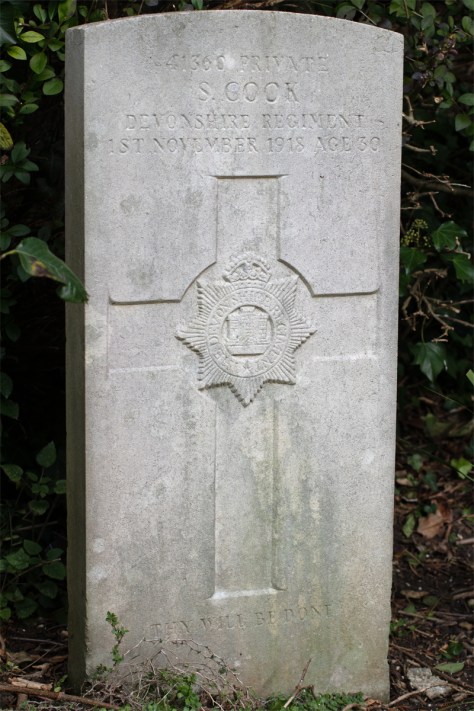
CWG: Private Samuel Cook

Private Samuel Cook

Samuel Cook was born in Bedfordshire, the eldest of two children to Alfred and Phoebe Cook.

Alfred was a forester, which saw the family move around the country; the 1881 census found them living in Rutland, ten years later the family was recorded in Northamptonshire and by the 1911 census, they were in Dorset.

Samuel was quick to follow in his father’s footsteps, supporting his mother and sister after Alfred died in 1906.

The was was underway when Samuel was called up. His service records show that he enlisted on 11th December 1915. His fitness seemed to have determined the path his military career would take.

Initially Private Cook was classified as C1 (free from serious organic diseases and able to serve in garrisons at home, able to walk 5 miles, see to shoot with glasses, and hear well), but was upgraded to B2 within six months. This identified that he was free from serious organic diseases, able to stand service on lines of communication in France, or in garrisons in the tropics and able to walk 5 miles, see and hear sufficiently for ordinary purposes.

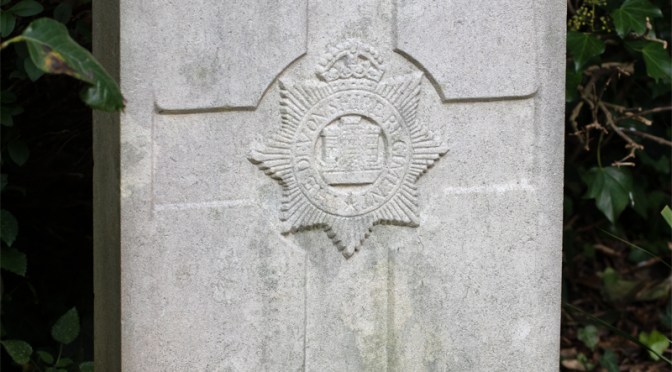
Samuel was first enrolled in 13th (Works) Battalion of the Devonshire Regiment, before being transferred to the 311th (HS) Labour Company in Plymouth.

Private Cook was one of the thousands of soldiers who contracted influenza and subsequently died of pneumonia on 1st November 1918.

There seems to be some dispute over how and when Samuel fell ill. A request for a detailed medical report was sent, “as he appeared to have contracted the disease from which he died whilst on leave for the purpose of getting married”. The same request confirms that he was never admitted to hospital while in the company. (There are no records oh Samuel having married, so I am assuming that his leave may have been for wedding preparations, of normal leave.)

The report came back confirming that he has died from “pneumonia complicating influenza which was contracted whilst on service at Beaulieu”.

However and wherever it happened, the disease claimed Private Samuel Cook’s life; he lies at rest in Sherborne Cemetery, Dorset.


For the stories of more of the fallen from the Great War, take a look at my Commonwealth War Graves page.


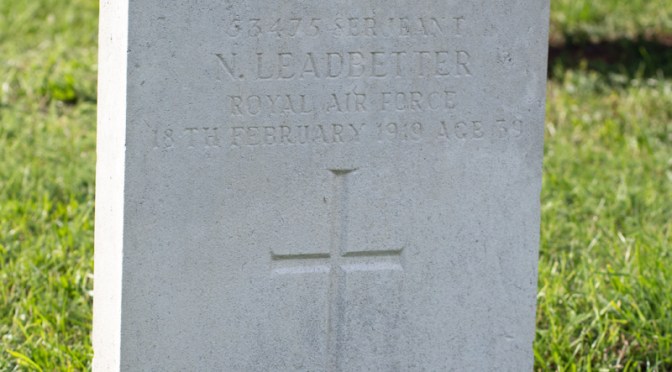
CWG: Serjeant Nicholas Leadbetter

Serjeant Nicholas Leadbetter

Born in Lancashire in 1877, Nicholas Leadbetter was the eldest of the four children of fisherman and merchant Isaac and his wife Elizabeth. He was quick to follow in his father’s line of work and set up his own fish shop in St Anne’s-on-the-Sea (nowadays known as Lytham St Anne’s).

Nicholas married Alice Griffiths in 1900, and their first child – Isaac – was born that Christmas.

Living near the station in Lytham, the young couple took on boarders to supplement Nicholas’ work. By the time of the 1901 census they had Dionysius Howarth, a chemist’s assistant, and Edgar Charles Randolph Jones, a grocer’s assistant, staying with them.

The Leadbetters don’t appear on the 1911 census, but from later records it is evident that they moved from Lancashire to the South West, where Nicholas ran a fish, game and poultry store in Yeovil. By this time, they were a family of four, as a daughter – Alice – was born in 1906.

Nicholas moved his family across the border to Sherborne, where he continued to ply his trade as a fishmonger and poultry dealer.

War broke out and, at the age of 39, he enlisted in the fledgling Royal Air Force, serving in France for the remainder of the fighting.

Serjeant Nicholas Leadbetter was demobbed in February 1919 and returned home to his family on Valentine’s Day. A local newspaper picks up his story from there.

He was feeling unwell at the time and immediately went to bed. Double pneumonia set in, and, despite the best medical aid, he passed away on Tuesday, leaving a widow, one son, and one daughter to mourn their loss.

Western Gazette: Friday 21st February 1919.

Serjeant Leadbetter’s funeral was a fitting one:

[It] was of military character, members of the Sherborne detachment of the 1st Volunteer Battalion Dorset Regiment being present. The coffin, which was covered with the Union Jack, was borne by members of the detachment, and at the Cemetery a firing party fired three volleys over the grave, and the buglers of the Church Lads’ Brigade sounded the last post.

There were many floral tributes. Mrs Leadbetter wishes to return thanks for the many letters of sympathy received from kind friends, and which she finds it impossible to answer individually.

Western Gazette: Friday 28th February 1919.

Serjeant Nicholas Leadbetter lies at peace in Sherborne Cemetery.


For the stories of more of the fallen from the Great War, take a look at my Commonwealth War Graves page.

CWG: Gunner Thomas Kelly

Gunner Thomas Kelly

As mentioned in the previous post, it is often a challenge to find details of the fallen soldiers whose graves pepper the churchyards of the UK.

Sadly, Gunner Thomas Kelly is one of those names lost to time.

Born in 1893, he lived in Alsager, Cheshire and enlisted in the Royal Field Artillery. Wounded, he was moved to the Yeatman Hospital in Sherborne, Dorset, but died of his wounds on 11th January 1918.

He was buried in the town’s cemetery on 16th January 1918; he was just 25.


For the stories of more of the fallen from the Great War, take a look at my Commonwealth War Graves page.

CWG: Gunner Frederick Brooks

Gunner Frederick Brooks

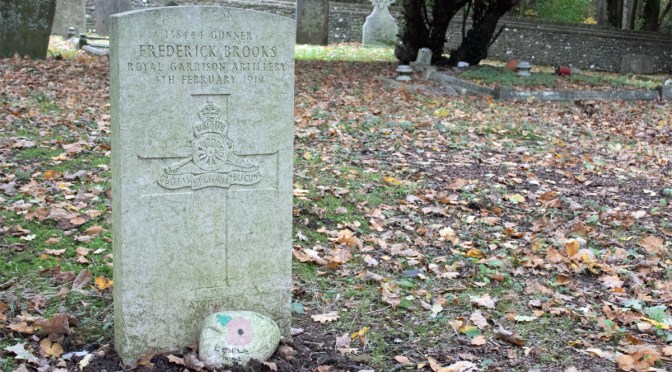
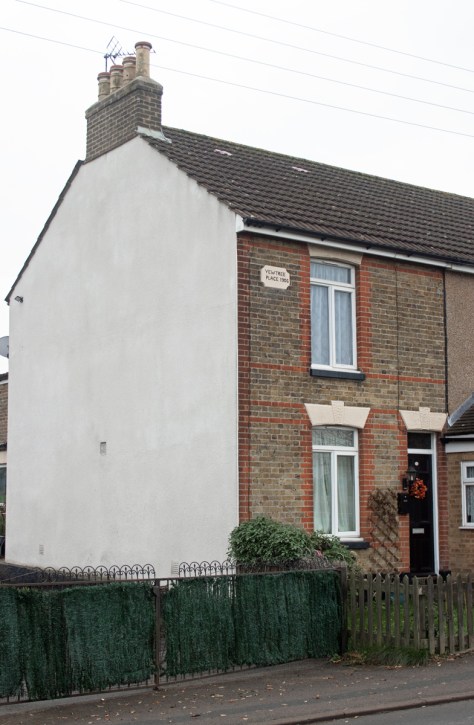
Frederick Brooks was born in the spring of 1897, the ninth of eleven children to Stephen and Grace Brooks. Stephen worked as a woodsman in Bredhurst, Kent, a trade his eldest sons followed him into.

Yewtree Cottages in Bredhurst, home to the Brooks Family

Frederick’s service records show that, when he enlisted in nearby Rainham, he was working as a fence maker. He was 5ft 6ins (168cm) tall, weighed 143lbs (65kg) and had fair physical development. He joined up in September 1915 and was assigned to the 2/1 Company Kent Royal Garrison Artillery.

Gunner Brooks’ early service was on home soil as part of the Territorial Force. However, he was transferred overseas as part of the British Expeditionary Force on 10th March 1917, where he served for nearly two years.

Frederick fell ill in January 1919, and was brought back to the UK for treatment. He was admitted to the Weir Red Cross Hospital in Balham, London, with bronchial pneumonia. He succumbed to heart failure just a few days later, on 4th February 1919. He was just 21 years old.

Gunner Frederick Brooks lies at rest in a peaceful corner of the secluded graveyard of St Peter’s Church in his home village of Bredhurst.


Frederick’s life throws a couple of coincidences my way. I used to live within spitting distance of his village, Bredhurst, and, indeed, have drive past his family home countless times. I also happened to have been born in the same hospital – the Weir in Balham – where Frederick had passed away 53 years earlier.


For the stories of more of the fallen from the Great War, take a look at my Commonwealth War Graves page.